
Last updated September 25, 2026
Non-destructive entry first, always - and we re-key Schlage, Kwikset, and Baldwin locks on the spot while you watch
You get a price before we start. It does not change when we arrive. No surprises.
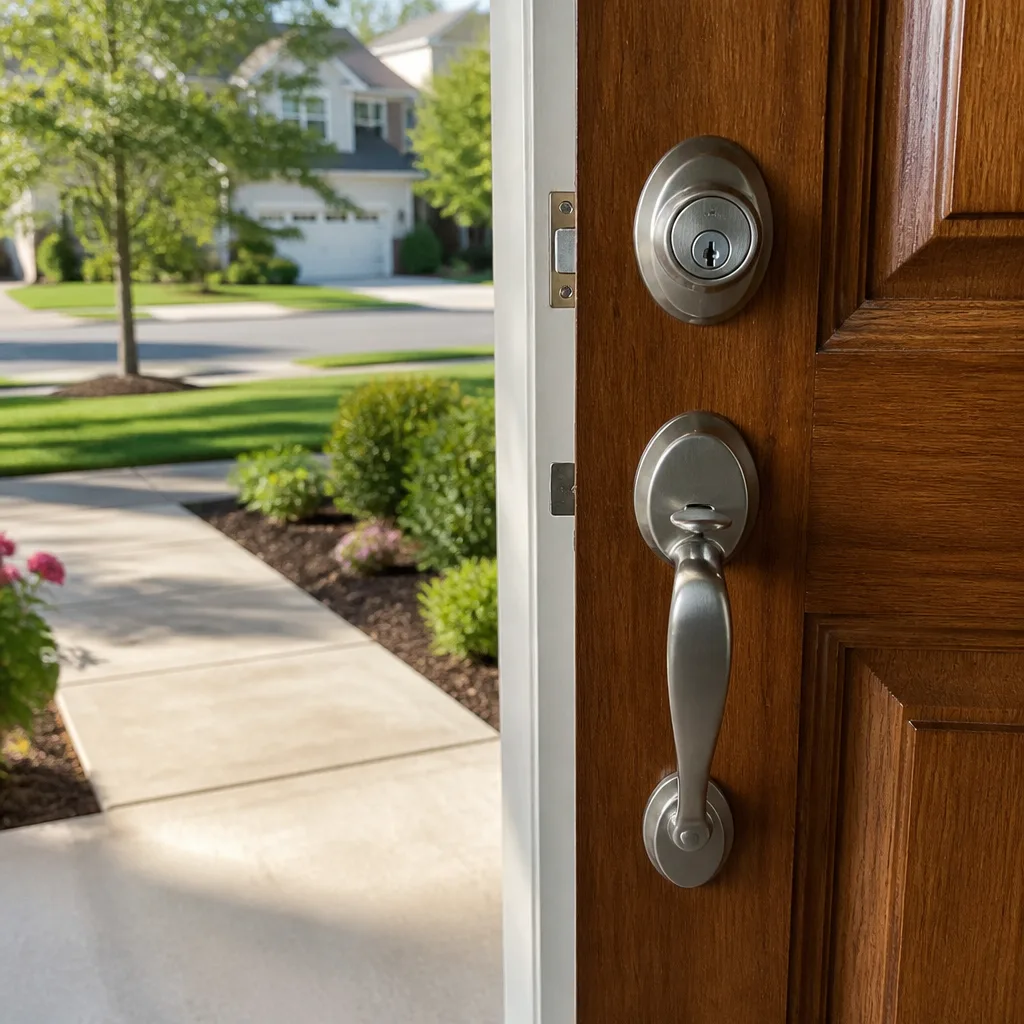
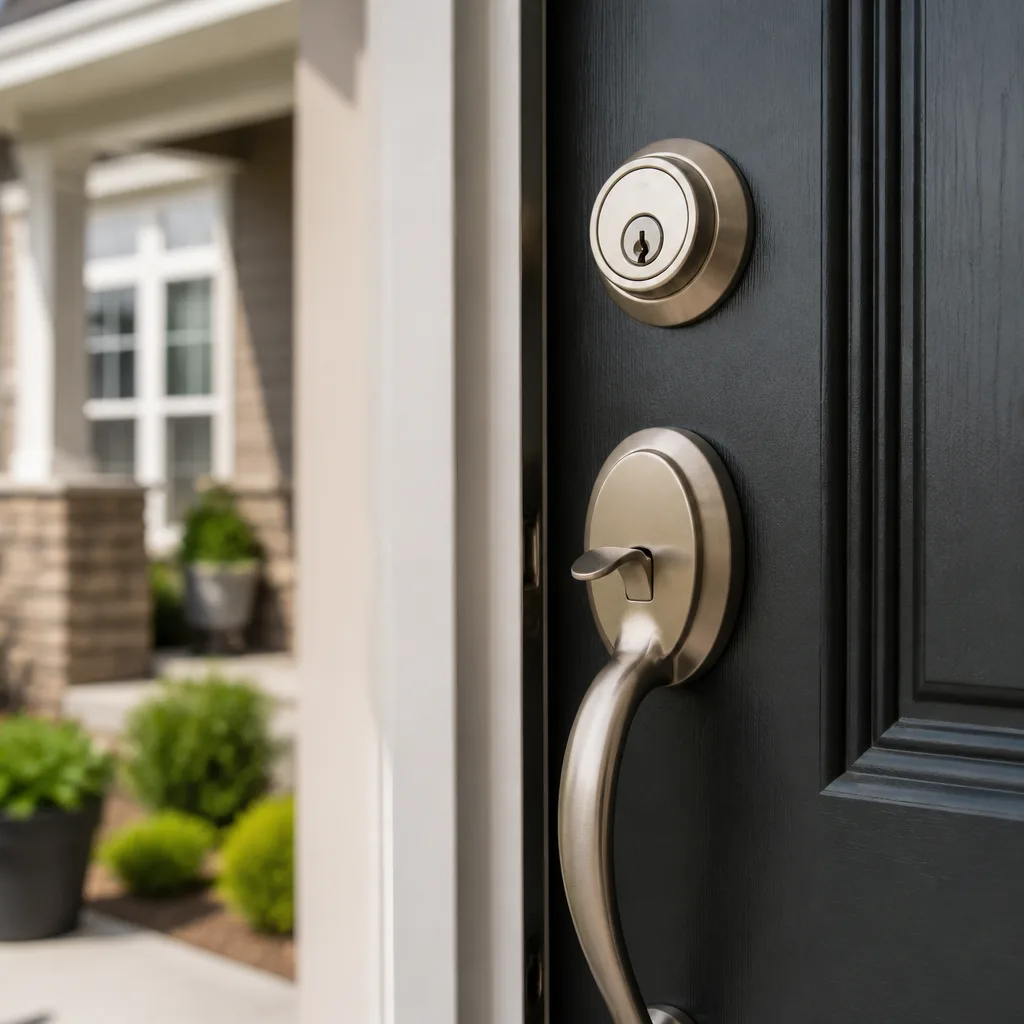
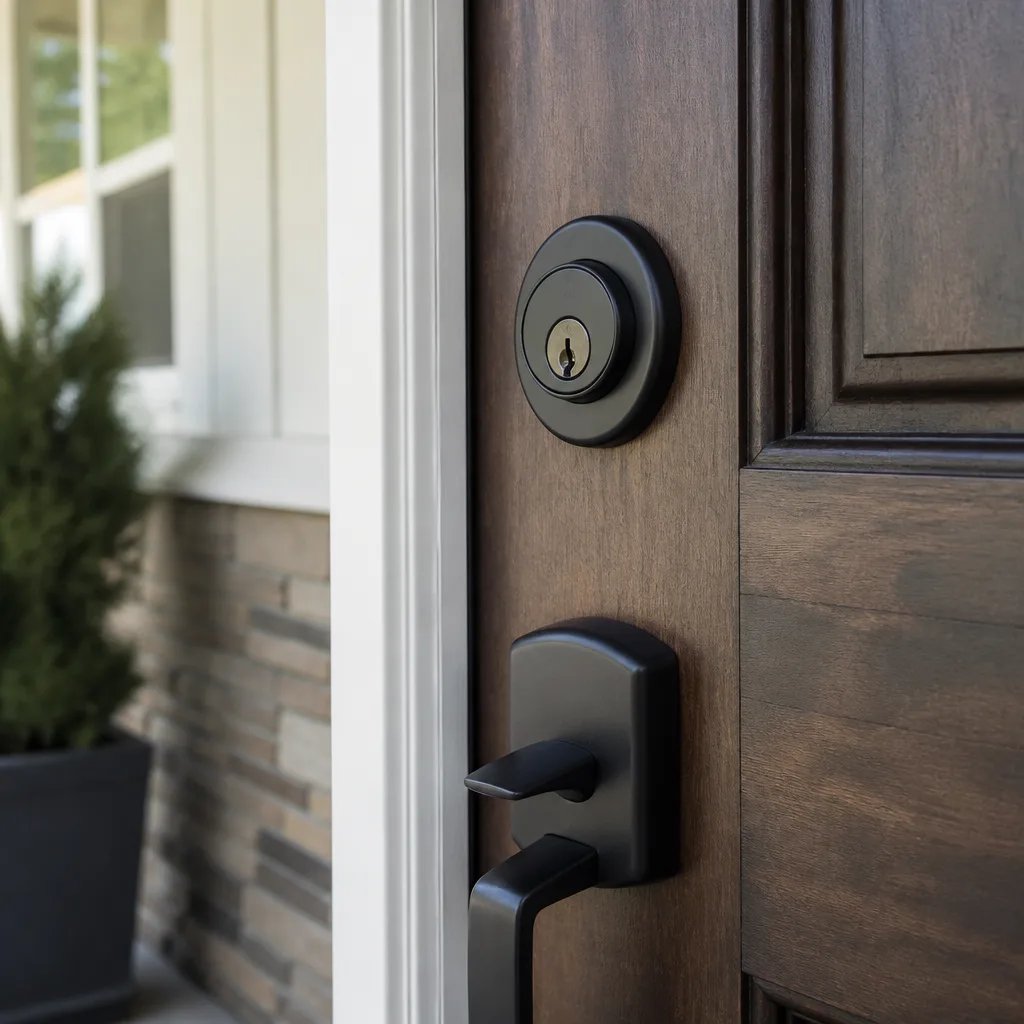
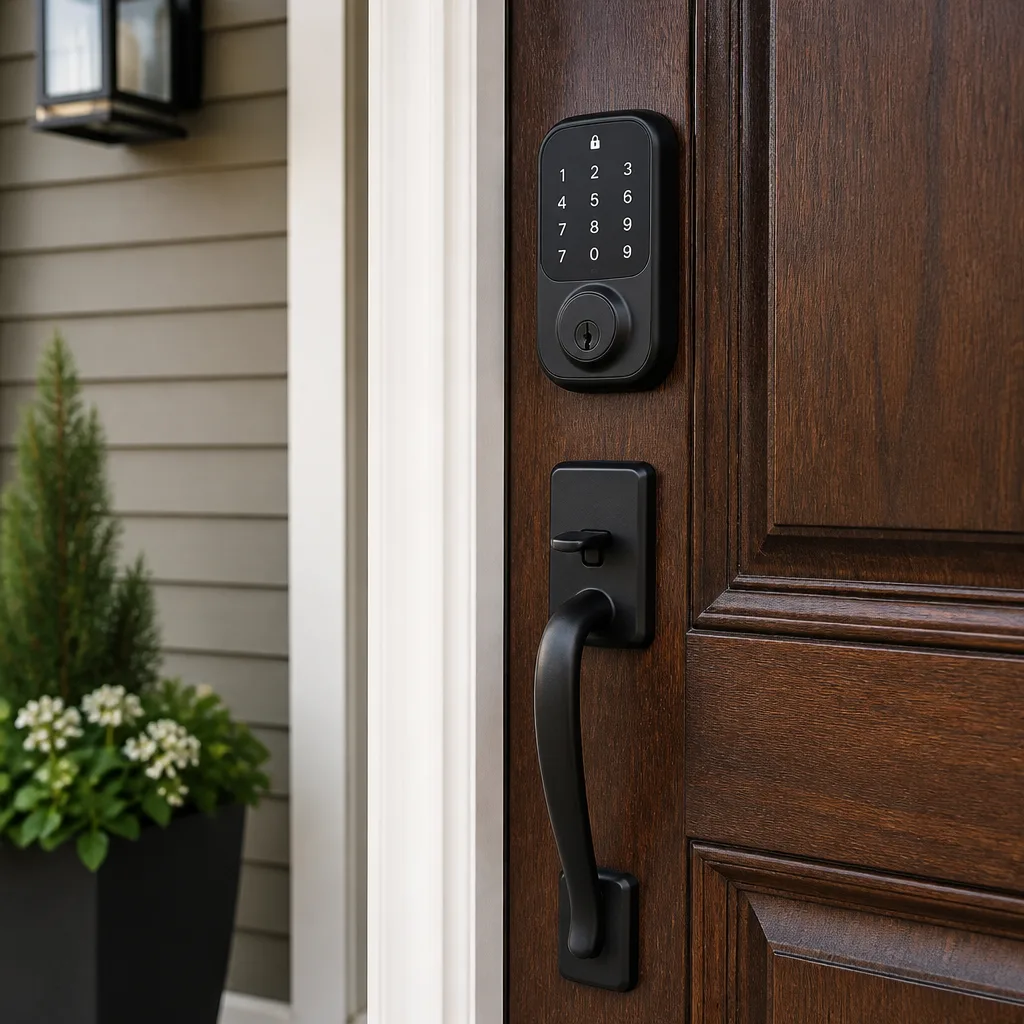
DIY vs Professional Locksmith: The New York Homeowner’s Decision Guide
A YouTube tutorial can teach anyone to rekey a Kwikset in twenty minutes. What it will not tell you is that rekeying a lock in a New York City rent-stabilized apartment without landlord notification may violate your lease and established Housing Court precedent - capable or not. In New York, the DIY-versus-professional question for locks is not primarily about skill level. It is about jurisdiction, warranty, and consequence: certain work is legally prohibited for tenants regardless of capability, co-op boards can reject hardware an owner purchased with their own money, and a botched cylinder installation can void a manufacturer’s security warranty or complicate a burglary insurance claim. This guide maps the decision by property type and job type, not by difficulty.
Quick Answer
For New York homeowners, DIY lock work is appropriate only for three low-risk jobs on owner-occupied single-family properties: interior knob replacement, adding a door chain, and deadbolt replacement where no door modification is required. All other scenarios - rental units, co-ops, condos, high-security hardware, or any work affecting insurance or warranty coverage - require a licensed professional. The cost of professional rekeying in New York typically runs $25-$50 per cylinder, with full lock installation ranging $150-$400 depending on hardware grade and door condition - see our Locksmith Cost Breakdown: The New York Homeowner’s Reference for 2026 for detailed pricing.
Table of Contents
- Tenant vs. Owner Jurisdiction in NYC Rentals
- Co-op and Condo Board Rules on Door Hardware
- Warranty Implications of DIY Installation
- The Three Jobs That Are Genuinely DIY-Appropriate
- Insurance Claim Consequences of Improper Lock Work
- Cost Comparison: DIY vs. Professional in New York
- What a Professional Locksmith Actually Does Differently
- Common Mistakes to Avoid
- When to Call a Professional
- Frequently Asked Questions
Tenant vs. Owner Jurisdiction in NYC Rentals
New York State and City housing law creates a clear hierarchy of who may perform what lock work, and tenants sit at the bottom of that hierarchy - details covered in our guide to Locksmith Permits, Codes & Inspections in NY: What You Need to Know.
Rent-stabilized and rent-controlled units. Under the Residential Locksmith in New York framework we operate within, tenants in stabilized units may not change locks without landlord notification and, in many cases, landlord-provided keys. Housing Court precedent in multiple Manhattan and Brooklyn cases has upheld lease termination for tenants who installed unapproved locks, particularly where the landlord could not access the unit for required inspections or emergency repairs. The Housing Maintenance Code requires that landlords maintain locks in good repair, but it does not grant tenants the right to modify those locks independently.
Market-rate rentals. These leases vary. Some explicitly prohibit tenant-installed locks; others require that any new lock be installed by a licensed locksmith with keys provided to the landlord or managing agent. We’ve responded to calls in Astoria and Park Slope where tenants installed Schlage deadbolts, only to receive lease violation notices because the work was not performed by a licensed professional and no master key was provided.
What tenants can legally do. In most NYC rental agreements, tenants may:
- Request lock rekeying between tenants (landlord’s obligation, not tenant’s right to perform)
- Install temporary, non-damaging security devices (door wedges, portable alarms) if lease permits
- Report broken locks to the landlord for repair under warranty of habitability
What tenants generally cannot do. Without explicit written consent:
- Rekey or replace entry door locks
- Install smart locks or electronic access devices
- Modify door frames or strike plates
- Add secondary locking mechanisms that prevent landlord emergency access
The consequence of unauthorized lock work in a rental unit is not merely a lease violation. In eviction proceedings, Housing Court judges have treated unapproved lock changes as evidence of tenant obstruction, accelerating termination timelines. For tenants in New York, the DIY option is effectively closed for entry door work regardless of mechanical skill.
Co-op and Condo Board Rules on Door Hardware
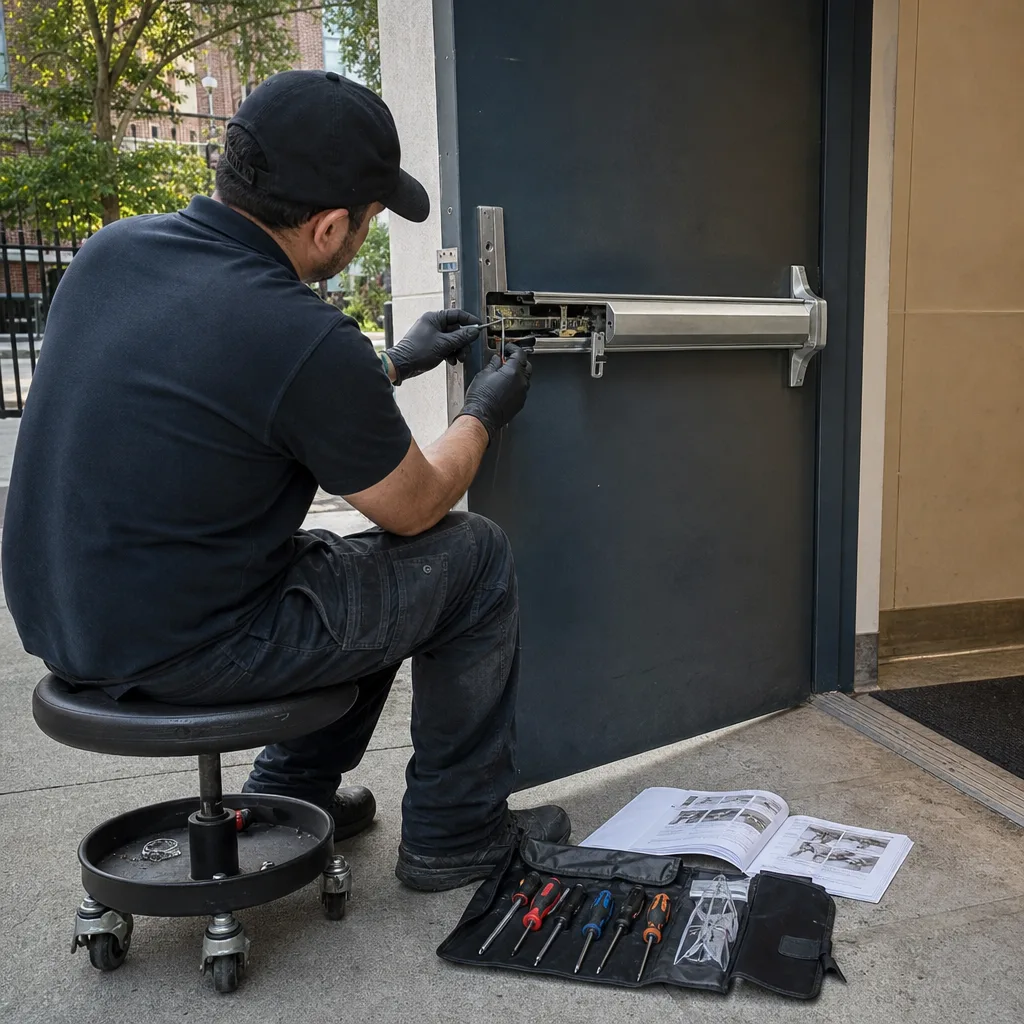
Cooperative and condominium ownership in New York introduces a second layer of restriction beyond municipal law: the building’s house rules, alteration agreements, and proprietary lease terms.
Co-op boards. In a co-op, you do not own your apartment in fee simple. You own shares in a corporation and hold a proprietary lease to occupy a specific unit. The board, through its house rules, can regulate door hardware for consistency of appearance, fire code compliance, and master key systems. We’ve serviced buildings on the Upper East Side where the board mandates specific Baldwin or Schlage finishes; in one case, a shareholder installed a Medeco high-security cylinder without approval and was required to remove it at personal expense after the board’s architect rejected the application.
Typical co-op approval process for lock changes:
- Submit alteration application with proposed hardware specifications, including UL fire rating and finish sample
- Board review, often including building architect or engineer consultation
- Approval with conditions (specific brands, specific finishes, keyway compatibility with building master system)
- Installation by insured, licensed locksmith with certificate of insurance on file with building
- Inspection and sign-off, with keys deposited per building policy
Condo associations. Condominium owners hold real property title, so boards have less authority to restrict interior modifications. However, most NYC condo declarations and bylaws regulate entry doors because they affect common element appearance, fire ratings, and security system integration. In new construction condos in Long Island City and Downtown Brooklyn, we’ve seen declarations that require all entry hardware to maintain the original developer specification for ten years.
Key difference. A co-op board can generally reject hardware for aesthetic reasons. A condo board needs a legitimate purpose tied to the declaration (safety, structural integrity, common element protection). Both can impose fines and require restoration of unapproved work. For owners in either property type, DIY installation without board review risks financial penalty and mandatory reversion.
Warranty Implications of DIY Installation
High-security lock manufacturers condition their product warranties on professional installation. This is not a technicality. It is a contractual term that affects whether you have recourse when a lock fails.
Medeco. Medeco’s limited warranty for residential cylinders requires installation by “a qualified security professional” using factory-authorized pinning. DIY installation voids the security warranty, though the mechanical warranty may remain partially in force. In practice, this means that if a Medeco cylinder is compromised by picking or bumping after DIY installation, Medeco will not honor the security claim. We’ve replaced Medeco cylinders in Greenwich Village and Tribeca where the original purchaser installed the lock themselves, discovered the security gap, and had no warranty path.
Mul-T-Lock. Mul-T-Lock’s Interactive+ and MT5+ platforms require registration of the installing dealer. The warranty is tied to the dealer’s certification. A homeowner who purchases Mul-T-Lock hardware online and installs it receives no dealer registration, and therefore no warranty coverage for key control or cylinder integrity.
ASSA Abloy. ASSA Abloy’s high-security subsidiaries (including Yale in its commercial grades) generally require that installation be performed by an authorized dealer to maintain the product warranty. The specific language varies by brand and product line, but the pattern is consistent: professional installation is a condition of coverage.
Entry-grade brands. Schlage and Kwikset residential products typically carry warranties that are not conditional on professional installation. However, even these warranties exclude damage from improper installation. A Schlage deadbolt installed with misaligned strike plates, forcing the bolt against the frame, will not be covered for mechanical failure because the failure resulted from installation error, not product defect.
For New York homeowners investing in high-security hardware - common in ground-floor units, brownstones with garden access, and properties near high-traffic corridors - DIY installation transfers all risk to the purchaser. The lock may function. The security warranty will not.
The Three Jobs That Are Genuinely DIY-Appropriate
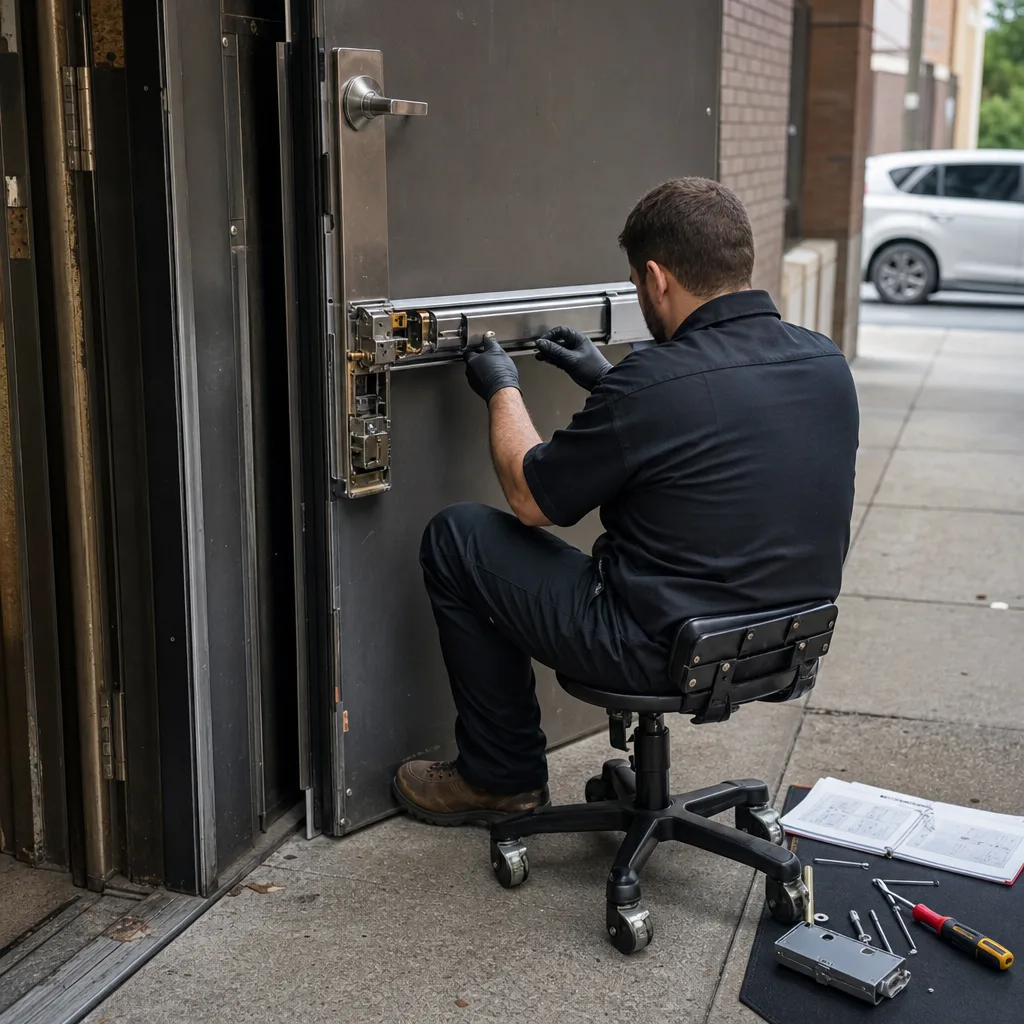
We are not suggesting that no lock work can be performed by a capable homeowner. Three jobs present sufficiently low risk for owner-occupied single-family properties in New York, provided specific conditions are met.
1. Interior door knob replacement.
- Door must be non-fire-rated (not a garage or basement egress door subject to code)
- Existing bore holes must match the replacement hardware specification
- No modification to door edge or face required
- Property must be owner-occupied single-family; not applicable to co-op, condo, or rental
The risk is mechanical failure from improper latch alignment. The consequence is a stuck interior door, not a security breach or code violation.
2. Adding a surface-mounted door chain or guard.
- Must be surface-mounted with screws only, no door modification
- Must not interfere with existing lock function or door closer
- Must comply with NYC fire code for egress (cannot prevent single-motion exit)
We’ve removed improperly installed chain guards in Brooklyn Heights where the chain mount blocked full door opening, creating an egress hazard. Surface mounting with proper positioning avoids this.
3. Deadbolt replacement on an owner-occupied single-family door.
- Existing deadbolt must be same backset (2-3/8″ or 2-3/4″) and same door prep
- Door must be solid wood or metal; hollow-core doors require reinforcement not suitable for DIY
- No modification to strike plate mortise or frame
- Property must be owner-occupied single-family with no HOA, co-op, or condo restrictions
Even this job carries risk. A deadbolt with insufficient throw extension into the frame provides minimal security improvement over a latch lock. In our Novak Lock & Security New York home service area, we’ve found DIY deadbolt installations in Forest Hills and Staten Island where the bolt extended only 1/2 inch into a softwood frame - easily defeated with a pry bar.
These three jobs share common characteristics: no legal jurisdiction issues, no warranty dependency, no insurance implications, and low consequence of error. Everything else - entry door work on multi-family properties, high-security hardware, smart locks, access control - requires professional involvement.
Insurance Claim Consequences of Improper Lock Work
Homeowner’s insurance policies in New York contain conditions that can void or reduce coverage for burglary or forced-entry claims when lock installation does not meet specific standards.
Policy language. Most policies require “reasonable security measures” or “adequate locks” without defining these terms precisely. In claim disputes, insurers investigate whether installed locks met manufacturer specifications, local building code, and industry standards. A lock installed by a homeowner without documentation of professional work creates evidentiary vulnerability.
What insurers may request after a burglary:
- Documentation of lock installation date and installer credentials
- Manufacturer specifications showing the lock was appropriate for the door type
- Evidence that the lock was functioning properly at time of loss
- Photographs of installation quality and strike plate engagement
- Maintenance records for smart or electronic locks
We’ve consulted on claims in New York where insurers denied coverage or applied deductibles based on installation findings. In one Manhattan case, a homeowner had installed a Kwikset SmartKey deadbolt on a metal door without proper door preparation. The bolt did not fully extend into the strike. The insurer’s forensic examiner cited “inadequate lock installation” as a contributing factor to successful forced entry, reducing the claim payment by 30 percent.
Documentation that protects claims. Professional installation generates the records insurers expect: written scope of work, installer license verification, product specification sheets, and photographic documentation. At Novak Lock & Security New York, every visit includes a documented photo record left with the customer - Haven Standard procedure, not an upgrade. This record becomes part of the customer’s file and is available for insurance or warranty purposes.
For New York homeowners, the question is not whether a DIY lock installation will function. It is whether, after a burglary, the installation can be defended to an insurer’s examiner. Most cannot.
Cost Comparison: DIY vs. Professional in New York
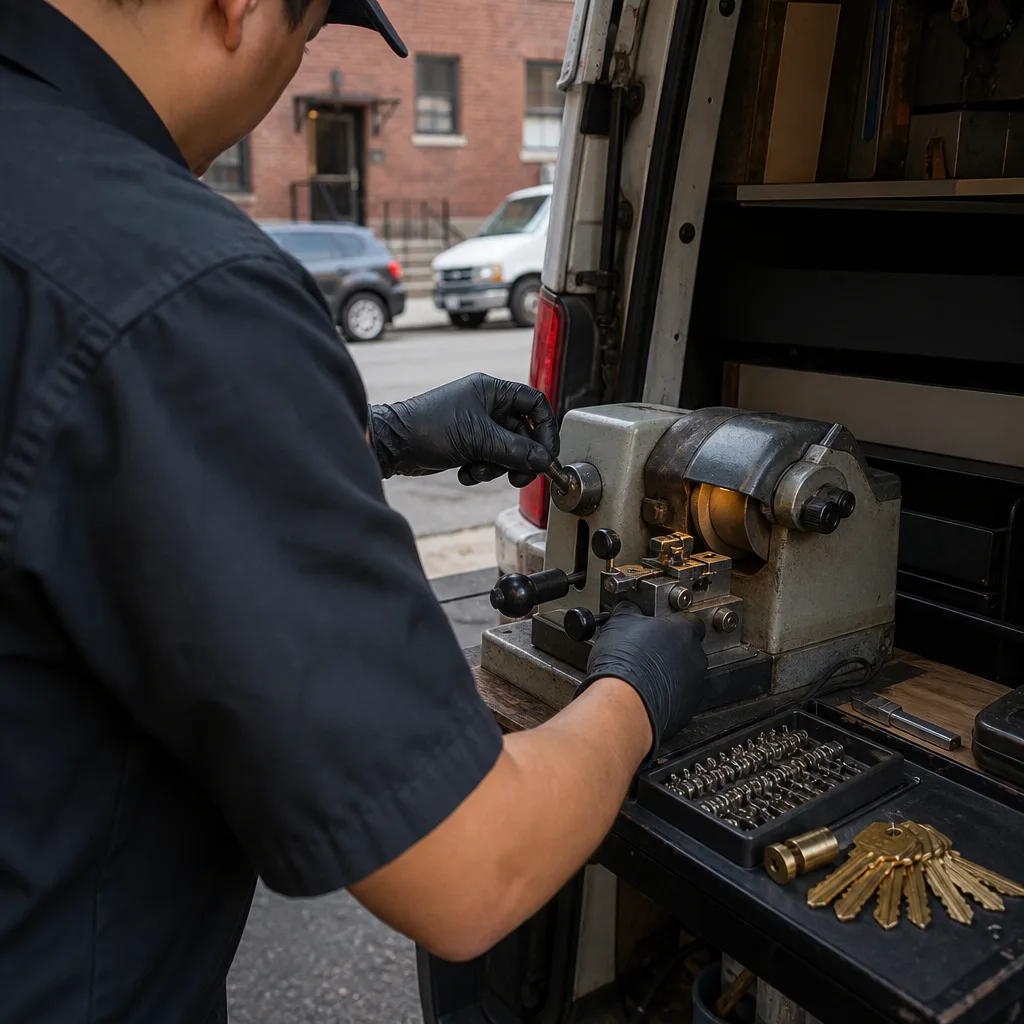
Direct cost comparison requires including the full cost of DIY, not merely the hardware sticker price.
DIY rekeying (single cylinder):
- Rekeying kit: $15-$40
- Replacement pins (if kit pins are incorrect): $8-$15
- Time value (2-4 hours for first attempt, including research and error correction)
- Risk cost: damaged cylinder requiring replacement ($40-$120)
Professional rekeying in New York:
- $25-$50 per cylinder, quoted in writing before work starts
- Includes pinning to new key, key duplication, and function testing
- Includes warranty on workmanship
DIY deadbolt installation:
- Entry-grade deadbolt (Schlage, Kwikset): $35-$80
- Tools (if not owned): drill, hole saws, chisels, $80-$200
- Door repair from misaligned bore: $150-$400 if professional remediation required
Professional deadbolt installation in New York:
- $150-$250 for entry-grade hardware, including labor and basic door prep
- $250-$400 for high-security cylinder (Medeco, Mul-T-Lock), including professional pinning and key registration
The break-even analysis favors DIY only when the homeowner already owns tools, has verified no jurisdiction restrictions, accepts no warranty coverage, and values their time at or near zero. For most New York properties, the cost gap narrows or reverses when risk and documentation value are included.
At Novak Lock & Security New York, Haven Standard Clause 1 applies: the price on the phone is the price on the invoice. There is no call-out surcharge added on arrival, no “trip charge” revealed after dispatch. This matters in a New York market where bait-and-switch pricing remains common.
What a Professional Locksmith Actually Does Differently
The difference between DIY and professional lock work is not primarily mechanical skill. It is the scope of assessment, documentation, and accountability that surrounds the mechanical task.
Door and frame assessment. Before installing any lock, we assess the door material, thickness, edge condition, and frame integrity. A 1-3/4 inch solid wood door in a pre-war Park Slope brownstone requires different preparation than a 1-3/8 inch hollow-core door in a new construction Long Island City condo. The strike plate location must account for frame settling, which is significant in buildings over fifty years old. We’ve found frames in Washington Heights where settling had shifted strike alignment by 3/8 inch - enough to prevent bolt engagement if not corrected.
Hardware specification matching. Professional specification considers:
- Backset measurement (distance from door edge to center of bore)
- Door thickness and face bore diameter
- Strike plate depth and frame material
- Keyway compatibility with existing master key systems
- Fire rating requirements (UL 10C for rated doors)
- ADA compliance for lever sets in multi-family common areas
Key control and registration. For high-security installations, we register the keyway with the manufacturer, record key codes in our secure system, and provide the customer with a key control certificate. This prevents unauthorized duplication and maintains warranty coverage. DIY installation cannot replicate this.
Documentation. Every Novak Lock & Security New York installation includes:
- Written scope of work, signed before commencement
- Photographic record of pre-existing condition, installation process, and completed work
- Written warranty document (365-Day Done Right Promise)
- Key control certificate for restricted keyway systems
- Invoice matching the phone quote, per Haven Standard Clause 1
This documentation serves warranty claims, insurance disputes, property sale disclosures, and co-op board compliance. It is not available from hardware store purchase and self-installation.
For Commercial Locksmith in New York applications, the documentation requirements expand to include certificate of insurance, fire department approval for access control modifications, and ADA compliance certification. These are not DIY-achievable under any circumstances.
Common Mistakes to Avoid
- Installing a deadbolt on a hollow-core door without reinforcement. The bolt will not anchor securely, and the door face will split under forced entry. We see this regularly in Flushing and Jackson Heights apartment conversions.
- Rekeying a rental unit lock without landlord notification. Beyond lease violation, this creates liability if emergency access is required and the landlord cannot enter. Housing Court has upheld evictions for this specific violation.
- Using interior-grade hardware on exterior doors. Kwikset and Schlage both produce interior privacy sets with no security rating. These are visually similar to entry sets but will fail immediately under attack. Homeowners in hurry purchase the wrong grade.
- Ignoring backset mismatch. A 2-3/8 inch backset deadbolt installed in a 2-3/4 inch door prep leaves visible bore holes and weakens the door. The hardware may function but the installation is defective and obvious to any inspector.
- Smart lock installation without verifying WiFi signal strength at door location. New York’s masonry construction, particularly in pre-war buildings, attenuates signal significantly. We’ve responded to calls in the West Village where smart locks failed to connect due to thick plaster-and-lath walls, requiring hardware replacement.
- Failing to check co-op or condo alteration requirements before purchase. The lock is installed, the board rejects it, and the homeowner pays twice. Check house rules first, buy hardware second.
- Not requesting a written estimate from any locksmith you do hire. The bait-and-switch pattern in New York involves low phone quotes with substantial add-ons at the door. Haven Standard Clause 1 was written specifically to prevent this: the price on the phone is the price on the invoice, contractually.
When to Call a Professional
Call a licensed locksmith when the property is not owner-occupied single-family; when the hardware is high-security or smart; when warranty coverage matters; when insurance documentation may be required; when the door or frame condition is unknown; or when the work affects a master key system, access control integration, or fire rating. In New York’s multi-family housing market, this describes most situations. See our How to Hire a Locksmith Contractor in New York: A Step-by-Step Guide for vetting professionals.
Novak Lock & Security New York offers free estimates throughout New York - call (551) 214-0800. Every estimate is delivered in writing before any work begins, with no call-out surcharge. We provide a free second opinion on any competitor’s written estimate. Our technicians are background-checked, uniformed, and work to The Haven Standard, with a documented photo record included on every visit. Browse more guides & resources on lock work and property security.
Frequently Asked Questions
Professional rekeying in New York typically runs $25-$50 per cylinder, with most residential entry doors requiring one or two cylinders. The price is quoted in writing before we start, and that written price is the price on the invoice - Haven Standard Clause 1. Call (551) 214-0800 for an exact quote; estimates are free.
Yes. At Novak Lock & Security New York, the dispatcher quotes a firm price, and the technician is contractually prohibited from changing it at the door. This rule has been in place since 2002. If the scope changes based on conditions we could not assess by phone, we stop work, explain the finding, and quote the additional work in writing before proceeding. No surprises.
Generally no, not without landlord consent. Rent-stabilized and rent-controlled tenants must notify the landlord and provide keys. Market-rate tenants must comply with lease terms, which typically require landlord notification and licensed locksmith installation. Unauthorized lock changes can result in lease violation notices and, in Housing Court, accelerated eviction proceedings.
For high-security brands - Medeco, Mul-T-Lock, ASSA Abloy - yes, DIY installation voids the security warranty. For entry-grade Schlage and Kwikset residential products, the warranty remains but excludes damage from improper installation. The distinction matters if the lock fails or is compromised: without professional installation documentation, you have no warranty claim.
Insurers may reduce or deny burglary claims if lock installation did not meet manufacturer specifications, building code, or industry standards. They may request installation documentation, installer credentials, and maintenance records. DIY installation typically generates none of this documentation, leaving the homeowner vulnerable in claim disputes.
Most co-op boards require an alteration application with hardware specifications, including UL fire rating and finish sample. The board’s architect or engineer reviews for compatibility with building systems. Installation must be by an insured, licensed locksmith with certificate of insurance on file. Approval timelines vary from two weeks to two months. Starting installation before approval risks fines and mandatory removal.
The Haven Standard is the quality and documentation framework shared across all ten Haven brands, including Novak Lock & Security New York. It governs every customer interaction: Clause 1 mandates written pricing before work starts; other clauses require background-checked technicians, documented photo records, and the 365-Day Done Right Promise. It is not a marketing term. It is the operational procedure we follow on every job.
The Bottom Line
The DIY-versus-professional decision for New York lock work is a map with three axes: legal jurisdiction, warranty protection, and consequence of error. For owner-occupied single-family properties, three low-risk jobs are genuinely DIY-appropriate. For all other properties and all other jobs, professional installation is not merely preferable - it is required for legal compliance, warranty coverage, and insurance protection. The cost difference, when fully accounted, is narrower than it appears. The documentation a professional provides - written scope, photo record, warranty, key control certificate - has value that extends far beyond the installation day. In New York’s complex housing market, capable hands are not enough. You need jurisdiction, warranty, and documentation on your side.
Written by Daniel Novak, Owner at Novak Lock & Security New York, serving New York since 2002.