
Last updated September 25, 2026
Non-destructive entry first, always - and we re-key Schlage, Kwikset, and Baldwin locks on the spot while you watch
You get a price before we start. It does not change when we arrive. No surprises.
How to Hire a Locksmith Contractor in New York: A Step-by-Step Guide
The New York City Department of Consumer Affairs receives more complaints about locksmith fraud than about any other home service trade except moving companies. In 2022, the median consumer loss to a bait-and-switch locksmith in the five boroughs was $347, and the pattern is identical in nearly every case: a low verbal quote on the phone, an unmarked vehicle arrival, and a handwritten invoice with a number two or three times higher once the lock is already drilled beyond repair. This guide is a hiring protocol. It will teach you to identify a legitimate locksmith contractor before anyone leaves for your address, to verify credentials in real time, and to document the transaction so thoroughly that a dispute never reaches the complaint stage.
Quick Answer
To hire a locksmith contractor in New York, verify the company’s DCA license number at nyc.gov/consumers before booking, confirm a flat written price by phone that matches the invoice format, and require photo ID and a marked vehicle on arrival. Document every stage: the existing hardware, the written quote, and the completed work.
Table of Contents
- The Three Phone-Stage Questions That Filter Out Fraud
- How to Verify a NYC Locksmith’s DCA License in Real Time
- What a Legitimate Written Quote Must Include
- Red Flags in the First 90 Seconds of the Job
- How to Document the Job Start-to-Finish
- What Locksmith Services Cost in New York
- When You Need Specialty Hardware or High-Security Installation
- Common Mistakes to Avoid
- When to Call a Professional
- Frequently Asked Questions
- The Bottom Line
The Three Phone-Stage Questions That Filter Out Fraud
Every bait-and-switch locksmith operation in New York depends on one condition: the customer is in a hurry and does not know what a legitimate booking sounds like. The phone call is the entire defense. Ask these three questions, in this order, and do not book until you receive direct answers.
Question 1: What is your DCA license number, and under what business name is it registered?
A legitimate locksmith in New York City must hold a Home Improvement Contractor license from the Department of Consumer Affairs. The license number is a seven-digit integer. The dispatcher should provide it immediately, without hesitation or deflection. If you hear “we’re licensed, don’t worry” or “the technician will show you his card,” end the call. The license attaches to the business entity, not to an individual technician. You will verify this number in step two.
Question 2: Will the price you quote me now be the full price on the invoice, with no additional charges for labor, service calls, or emergency fees?
This is the question that separates a price-committed contractor from a call-center dispatch operation. The legitimate answer is yes, with the price stated in dollars and cents. The fraudulent answer is a version of “it starts at $X” or “the technician will assess on site.” At Novak Lock & Security New York, Haven Standard Clause 1 governs every call: the price quoted by the dispatcher is the price on the invoice, and the technician is contractually prohibited from changing it at the door. This rule has been in place since 2002. Any dispatcher who cannot make this commitment in plain language is not running a business that plans to honor its quote.
Question 3: What will the invoice look like, and how will I receive it?
A legitimate contractor emails or hands you a detailed, itemized invoice with line items for labor, parts, and any applicable tax. A fraudulent operation produces a handwritten total on a blank sheet or a generic receipt with no business name matching the DCA registration. Ask whether the invoice will show the business name, address, DCA license number, and itemized charges. If the dispatcher cannot describe the invoice format, you are not speaking to a contractor. You are speaking to a lead aggregator who will sell your address to the lowest bidder.
We have taken over 60,000 service calls since 2002. The customers who never become complaints are the ones who asked these three questions and received three direct answers.
How to Verify a NYC Locksmith’s DCA License in Real Time
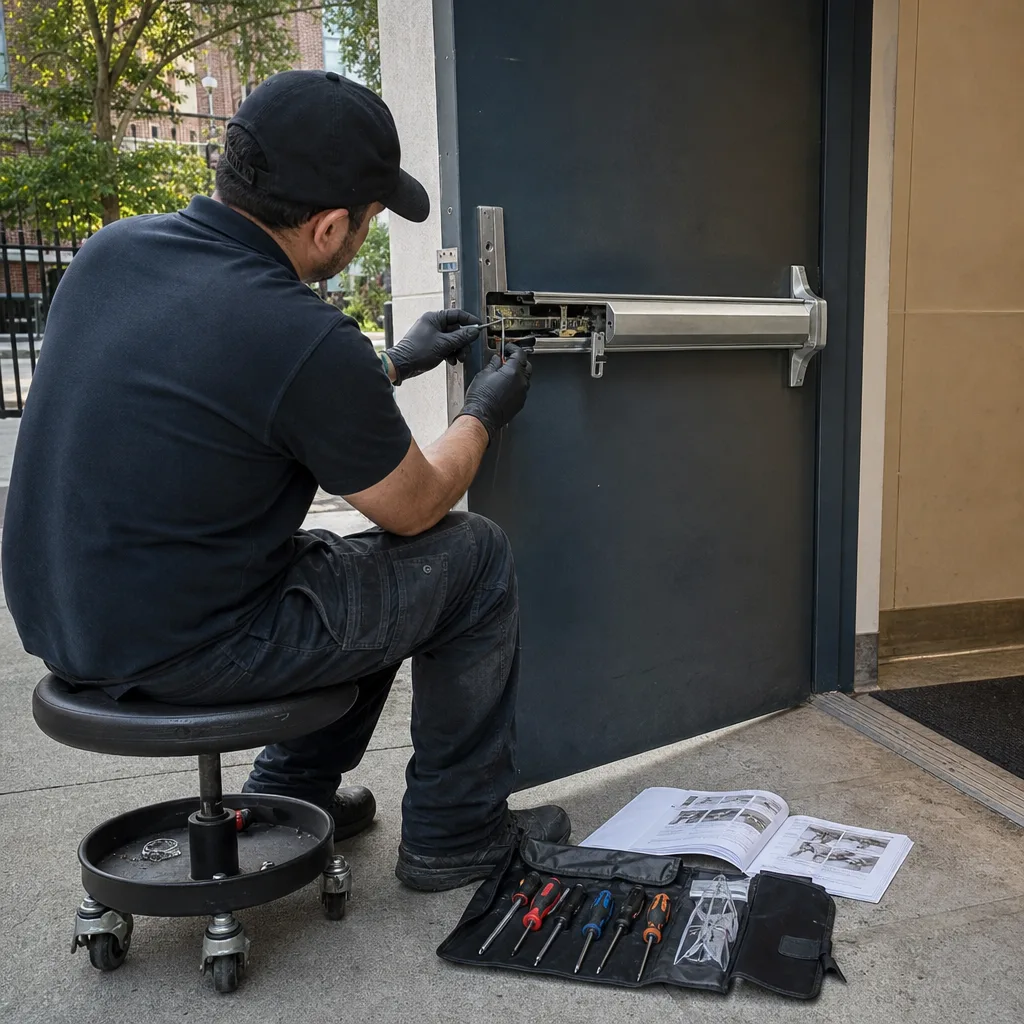
Verification takes 90 seconds. Do it while still on the phone.
- Open nyc.gov/consumers in your browser.
- Navigate to “Check a DCA License” or search “DCA license lookup.”
- Enter the seven-digit license number the dispatcher provided.
- Confirm that the business name on the record matches the name you were given.
- Check the license status: it must read “Active.”
- Review the complaint history. A pattern of recent complaints is a disqualifier regardless of license status.
Common evasion tactics and how to counter them:
- “We’re licensed under our parent company.” The DCA license must match the business name on the invoice. A mismatch is a red flag for shell-company liability avoidance.
- “Our technician carries the license.” Individual locksmiths do not carry personal DCA licenses in New York. The license belongs to the business entity.
- “We’re in New Jersey, so we don’t need a NYC license.” Any locksmith performing work within the five boroughs must hold a NYC DCA Home Improvement Contractor license. Out-of-state registration is irrelevant.
- “The website is down right now.” The DCA lookup has operated continuously for over a decade. This is a stalling tactic.
In our experience serving New York since 2002, fewer than half of the locksmith businesses advertising in Manhattan, Brooklyn, and Queens maintain active DCA licenses. The others operate in a gray zone of expired licenses, unlicensed subcontractors, or outright fraudulent registration. Verification is not optional. It is the first step of the hiring protocol.
What a Legitimate Written Quote Must Include
New York consumer protection law does not require a written quote for jobs under $500, but a legitimate locksmith provides one anyway. The quote is your only enforceable record if the final invoice diverges from the phone price. A proper written quote contains six elements:
- Business name and DCA license number - matching the verified record.
- Customer name and service address - establishing jurisdiction for any dispute.
- Description of the work - specific, not generic. “Rekey two Schlage deadbolts and one entry knob” not “rekey locks.”
- Parts and materials - identified by grade and brand. “Two Schlage B60N Grade 1 deadbolt cylinders” not “high-security locks.”
- Labor charges - flat rate or hourly rate with estimated hours, never open-ended.
- Total price with expiration date - valid for a stated period, typically 30 days.
At Novak Lock & Security New York, every quote is delivered by email or text before dispatch, with a photo of the dispatcher’s screen included for timestamp verification. The customer replies to confirm, creating a written chain. Haven Standard Clause 1 requires this on every job. A quote delivered only by voice, with nothing in writing, cannot be enforced and should not be accepted.
For commercial locksmith work in New York, the quote must also specify key control policies, master key hierarchy if applicable, and the warranty terms on installed hardware. Commercial access control and master key systems require surveyed scope and flat per-lock pricing, not dispatch-time estimates.
Red Flags in the First 90 Seconds of the Job
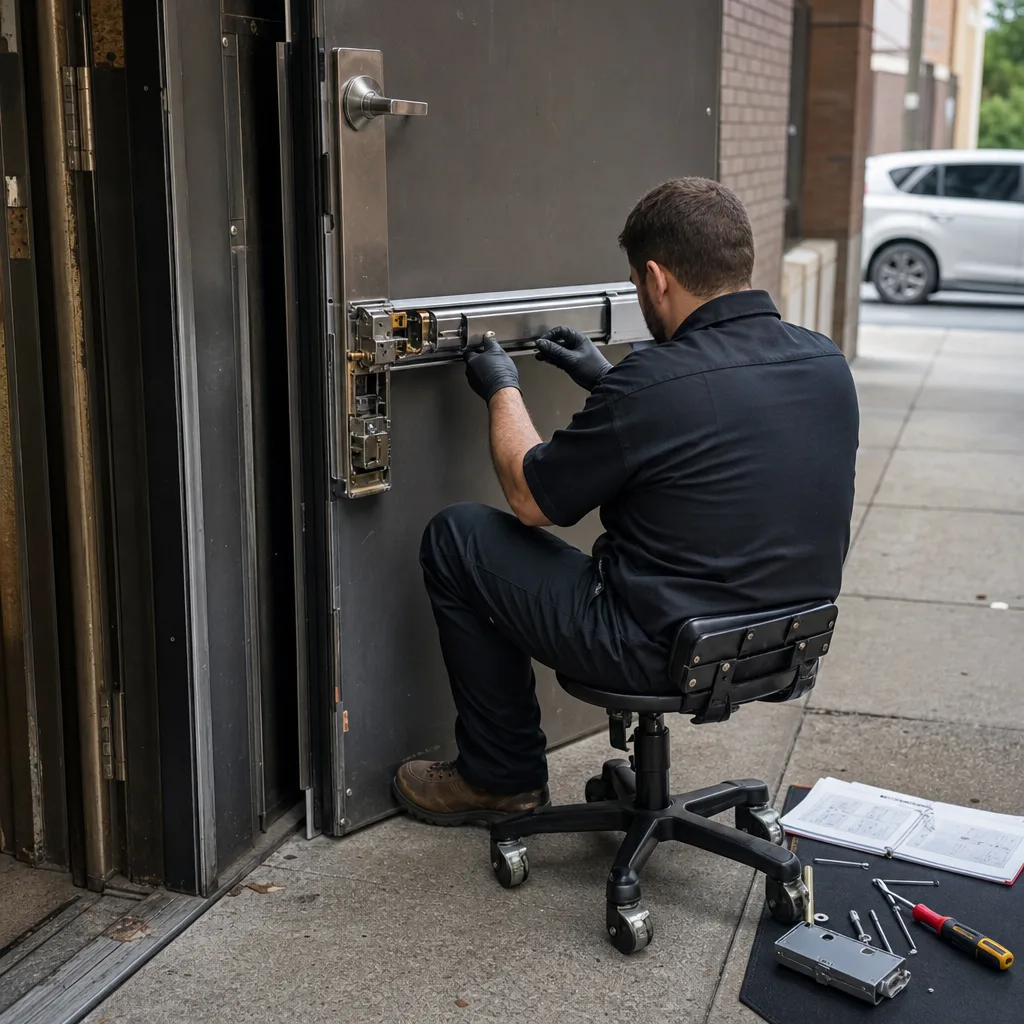
The technician has arrived. These observations in the first minute and a half determine whether you proceed or terminate the visit.
The vehicle is unmarked or bears a different business name
A legitimate locksmith in New York operates from a marked van or truck with the business name, DCA license number, and contact information visible. An unmarked personal vehicle, or a vehicle with magnetic signs that peel off, indicates a subcontractor or gypsy operator with no fixed business address. Photograph the license plate and vehicle before the technician approaches your door.
The technician refuses to show photo ID and DCA license documentation
Every technician must produce company photo identification and a copy of the business DCA license on request. At Novak Lock & Security New York, our technicians carry both, plus a Haven Standard identification card with their technician number. Refusal to show ID is immediate grounds for cancellation. Do not allow an unidentified person to access your lock hardware.
The technician recommends drilling before attempting non-destructive entry
This is the signature move of the bait-and-switch operator. Drilling a lock destroys it, forcing you to purchase a replacement at an inflated price. A skilled locksmith can pick, bump, or bypass most residential locks without drilling. The exceptions are high-security cylinders (locks that cannot be picked or bumped by standard tools), such as certain Mul-T-Lock and Abloy configurations, where drilling may be the only method. But the technician must explain why, show you the lock grade, and obtain your explicit authorization before drilling. A drill produced in the first 30 seconds is a scam.
The invoice is handwritten, differs from the phone quote, or lacks itemization
Compare the invoice to your written quote line by line. Any discrepancy, even “tax we forgot to mention,” is a violation. At Novak Lock & Security New York, Haven Standard Clause 1 applies: the price on the phone is the price on the invoice, period. We have never added a charge post-quote in 60,000 jobs. A contractor who does so once will do so habitually.
How to Document the Job Start-to-Finish
Documentation transforms a he-said-she-said dispute into an enforceable claim. In New York’s small claims court, a well-documented case against a fraudulent locksmith typically resolves in the consumer’s favor. The documentation protocol has four stages.
Before the technician arrives
Photograph the existing lock hardware from multiple angles. Capture the brand name, model number if visible, and the condition of the strike plate and door frame. This establishes the baseline. If the technician later claims the lock was “already damaged,” you have timestamped evidence to the contrary.
During the phone booking
Save the written quote, confirmation text, or email. Screenshot the DCA license lookup showing the active status. Record the dispatcher’s name if provided. These records establish the business entity you contracted with, critical if the technician claims to work for a different company on arrival.
During the service visit
Photograph the technician’s ID, the vehicle, and the work in progress. If drilling is proposed, photograph the lock beforehand and request a written explanation of why non-destructive methods are not feasible. At Novak Lock & Security New York, every visit includes a documented photo record left with the customer at job completion, showing before, during, and after states. This is standard procedure, not an upgrade.
After completion
Retain the itemized invoice, any warranty documentation, and your own photographs. For high-security installations, retain the key control card that records pinning specifications. This card is required for future rekeys and proves authorized ownership of the keyway.
Our 365-Day Done Right Promise requires this documentation trail. If a lock fails, a rekey is incorrect, or a security gap is discovered, the photo record and written scope allow us to diagnose remotely and return with the correct solution. Customers without documentation often pay twice for the same problem.
What Locksmith Services Cost in New York
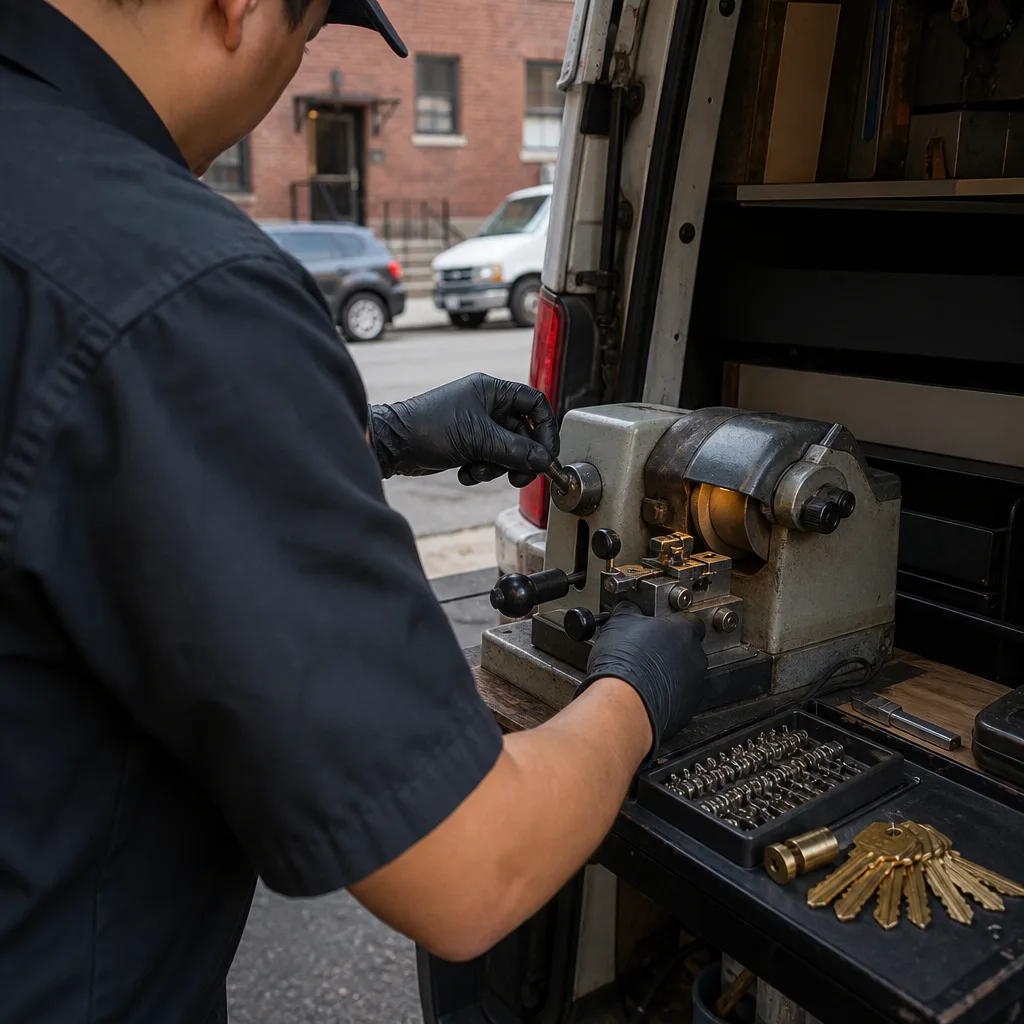
Manhattan and the outer boroughs carry higher labor rates than national averages due to parking costs, travel time, and commercial rent. These ranges reflect 2024 market conditions for legitimate, licensed contractors. Prices below these ranges are common bait-and-switch hooks.
| Service | Typical Range in New York | What Affects Price |
|---|---|---|
| House lockout (non-destructive entry) | $120 - $220 | Time of day, lock grade, travel distance |
| Lock rekey (per cylinder) | $25 - $45 | Cylinder type, key quantity, pin complexity |
| Deadbolt installation (Grade 2) | $180 - $320 | Door material, existing prep, strike reinforcement |
| High-security cylinder installation (Mul-T-Lock, Abloy) | $280 - $550 | Key control level, restricted keyway, registration |
| Master key system (per cylinder) | $45 - $85 | Hierarchy levels, total cylinder count, key blanks |
| Access control reader installation | $650 - $1,400 | Credential type, door prep, network integration |
These are ranges, not quotes. At Novak Lock & Security New York, we provide a firm written price before dispatch, with no call-out surcharge added on arrival. The price quoted is the full price on the invoice, per Haven Standard Clause 1.
For residential locksmith services in New York, we also offer a Free Second Opinion on Any Written Estimate. Bring us a competitor’s quote and we will review it at no charge, identifying unnecessary work, incorrect hardware grades, or missing scope items.
When You Need Specialty Hardware or High-Security Installation
Not every lock in New York requires high-security hardware. A rental unit in Astoria with tenant turnover benefits from a standard rekeyable cylinder. A brownstone in Park Slope with original mortise locks needs a locksmith who understands vintage hardware, not a drill-happy operator. A commercial building in Midtown with SOX or HIPAA obligations needs access control systems in New York with audit trails and credential management.
High-security cylinders, such as those manufactured by Mul-T-Lock, Abloy, and certain Schlage Primus configurations, provide pick resistance, bump resistance, and restricted key duplication. The restriction means keys can only be cut by authorized dealers with the proper key control card. This prevents former tenants, employees, or contractors from copying keys at a hardware store.
Factory-authorized work on these systems requires specific training and equipment. A technician who carries Mul-T-Lock or Abloy authorization will produce the credential on request. Unauthorized duplication of restricted keyways voids the manufacturer’s warranty and compromises the security investment.
In our New York work, we regularly encounter buildings where a previous locksmith installed high-security cylinders without registering the keyway or providing the control card. The result is a lock that cannot be rekeyed without drilling, defeating the purpose of the hardware. Proper installation includes registration, card provision, and documentation of the pinning sequence.
Common Mistakes to Avoid
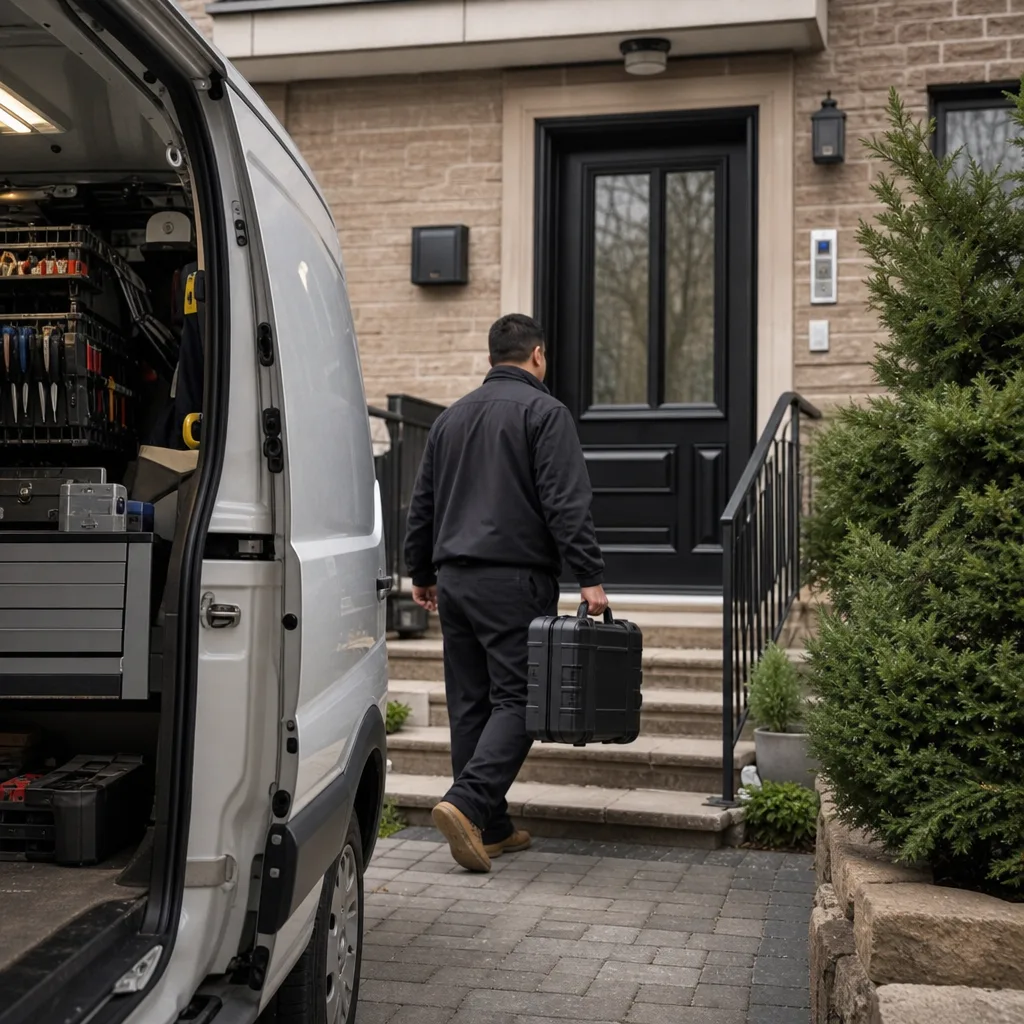
- Booking based on the lowest Google Ads price. The $19 service call is the standard bait. The average final invoice from these operators is $380-$600. A legitimate locksmith in New York cannot operate a vehicle, carry insurance, and pay DCA fees on $19 calls.
- Accepting a verbal quote without written confirmation. Verbal quotes are unenforceable. The dispatcher who quotes $85 by phone and the technician who demands $340 at the door are the same operation working from a script.
- Failing to verify the DCA license before booking. Verification takes 90 seconds. Complaint resolution takes months. The small time investment at the front end prevents the large time loss at the back end.
- Allowing drilling without written explanation. Once a lock is drilled, you have lost leverage. The technician knows you cannot send them away with an open door or a destroyed lock. Demand explanation and authorization in writing before any destructive method.
- Not photographing the technician and vehicle. Fraudulent operators rely on anonymity. A photograph of the license plate, the vehicle, and the technician’s face creates accountability. Legitimate technicians expect and accommodate this.
- Paying cash without a detailed receipt. Cash payments to unmarked vehicles with handwritten receipts are untraceable. Use a credit card or digital payment to create a transaction record with the business name.
- Assuming all locksmiths carry insurance. Ask for a certificate of insurance naming the business entity. General liability coverage is standard for legitimate contractors; absence is common for gypsy operators.
When to Call a Professional
Call a professional locksmith when the lock mechanism is malfunctioning (sticky key, loose cylinder, misaligned strike), when you have lost keys and cannot account for all copies, when moving into a new residence in New York, or when your security needs have changed (new tenant, domestic separation, employee termination). For automotive lockouts, a professional carries the tools and programming equipment to open and rekey modern vehicles without damage to the door or electronics.
Novak Lock & Security New York offers free estimates in New York. Call (551) 214-0800 to speak with a live dispatcher, verify our DCA license in real time, and receive a firm written price before any technician is dispatched. Our calls are answered by a live person, 24/7, with no voicemail queue and no callback window.
Frequently Asked Questions
Ask for the DCA Home Improvement Contractor license number, a seven-digit code, and verify it at nyc.gov/consumers. The license must be active and registered to the business name on the invoice. Call (551) 214-0800 and we will provide our number for immediate verification.
With a legitimate contractor, yes. At Novak Lock & Security New York, Haven Standard Clause 1 prohibits any technician from changing the quoted price at the door. The price on the phone is the price on the invoice, with no exceptions since 2002. If a dispatcher will not commit to this in writing, do not book.
Emergency response times in Manhattan and Brooklyn typically range from 20 to 45 minutes during business hours, longer in outer Queens, Staten Island, or overnight. The legitimate contractor states a realistic window, not an impossible one. We do not promise 15-minute arrivals we cannot meet.
Rekeying is sufficient if the existing hardware is Grade 2 or higher, properly installed, and in good condition. Replacement is necessary if the locks are damaged, outdated, or of unknown provenance. In pre-war buildings, we often find original mortise locks that can be rekeyed but require strike plate reinforcement to meet modern security standards.
A high-security lock uses a restricted keyway and pick-resistant cylinder, such as Mul-T-Lock or Abloy configurations. You need one if you cannot control who has copied your keys, if you have high-value assets, or if your insurance policy requires certified hardware. For most residential rentals in New York, a properly rekeyed Grade 2 deadbolt is adequate.
Do not pay under duress. State that you will pay the quoted price only and that you are documenting the transaction. Photograph the technician, vehicle, and invoice. File a complaint with the NYC Department of Consumer Affairs at nyc.gov/consumers. If you paid by credit card, dispute the charge with your issuer. Novak Lock & Security New York provides a Free Second Opinion on Any Written Estimate if you need documentation of unreasonable charges.
The Bottom Line
Hiring a locksmith in New York is a procurement decision that happens under time pressure. The contractors who exploit that pressure are identifiable in the first three minutes of a phone call if you know what to ask. Verify the DCA license. Confirm a flat written price. Require marked vehicles, photo ID, and itemized invoices. Document everything. These steps do not add friction; they eliminate the far greater friction of a fraudulent invoice, a drilled lock, and a months-long complaint process. The legitimate locksmith will welcome your diligence. The fraudulent operator will end the call and move to the next number.
Written by Daniel Novak, Owner at Novak Lock & Security New York, serving New York since 2002.