
Last updated September 25, 2026
Non-destructive entry first, always - and we re-key Schlage, Kwikset, and Baldwin locks on the spot while you watch
You get a price before we start. It does not change when we arrive. No surprises.
Locksmith Warning Signs: A New York Homeowner’s Reference Guide
The Federal Trade Commission and NYPD have documented the same locksmith scam pattern across New York for over a decade: a Google ad with a fake local address, a quoted price under $35, and a final invoice over $200 for a lock that cost $8 wholesale. The scam is not random. It follows four predictable stages, and each stage has warning signs a homeowner can spot before any work begins. This guide catalogs those signs chronologically, from the ad you click to the invoice you sign, with specific checks you can run at each point.
Quick Answer
A legitimate locksmith in New York provides a flat, specific dollar price before dispatch, arrives in a marked vehicle with company ID, and delivers a written invoice matching the quoted price. Red flags include ads with unverifiable addresses, phone quotes under $35 for emergency service, unmarked vehicles, immediate recommendations to drill, and invoices with line items not quoted in advance.
Table of Contents
- Ad-Stage Red Flags: Spotting Fake Listings Before You Click
- Phone-Stage Red Flags: What the Dispatcher Will and Won’t Say
- Arrival-Stage Red Flags: Reading the Technician and the Vehicle
- Invoice-Stage Red Flags: What the Paperwork Reveals
- What to Do If You’re Mid-Job and Recognize the Pattern
- How to Verify a Legitimate Locksmith in New York
- Common Mistakes to Avoid
- When to Call a Professional
- Frequently Asked Questions
Ad-Stage Red Flags: Spotting Fake Listings Before You Click
The scam begins with a search result that looks local. In New York, where demand for emergency locksmith service is concentrated in dense neighborhoods like the Upper East Side, Astoria, and Park Slope, fake listings exploit geographic trust. The operator knows you want someone nearby, so they manufacture proximity.
Here is how to check an address before you call.
- Look up the claimed address on Google Street View. Many scam ads use residential buildings, parking lots, or addresses that do not exist. A legitimate locksmith in New York operates from a commercial location with signage visible from the street. If Street View shows a brownstone with no storefront, or a building under construction, the address is likely rented or fabricated.
- Cross-check the business name with the New York City Department of Consumer Affairs (DCA) license database. The DCA requires all locksmiths to display their license number in advertising. A real license begins with a specific format; a missing or suspicious number is grounds to move on. The DCA database is searchable online and takes under a minute to verify.
- Check for multiple business names at the same address. Scam operations often register dozens of shell names to a single location or virtual office. Search the address itself, not just the business name. If three or four different locksmith brands appear at 123 Main Street, you are looking at a lead-generation hub, not a local shop.
- Examine the phone number. A New York locksmith should have a local area code: 212, 646, 718, 917, or 347. An 800 number with no local alternative, or a number that routes to a call center in another state, is a common setup for bait-and-switch operations that dispatch unvetted subcontractors.
- Review the price language. Ads promising “$15 service call,” “$19 lockout service,” or “starting at $25” are using a known psychological anchor. The FTC has specifically cited these figures in consumer alerts. No legitimate locksmith in New York can dispatch a technician, cover vehicle costs, and perform labor at these rates. The low figure is designed to get the technician to your door, where the price escalates.
In our experience serving New York since 2002, the legitimate operators we know, including Novak Lock & Security New York home, quote specific flat prices for specific services. A residential lockout in Manhattan or Brooklyn typically runs $85-$150 depending on time of day and lock type, quoted in writing before we dispatch. Anyone advertising half that amount is planning to make it up elsewhere.
Phone-Stage Red Flags: What the Dispatcher Will and Won’t Say
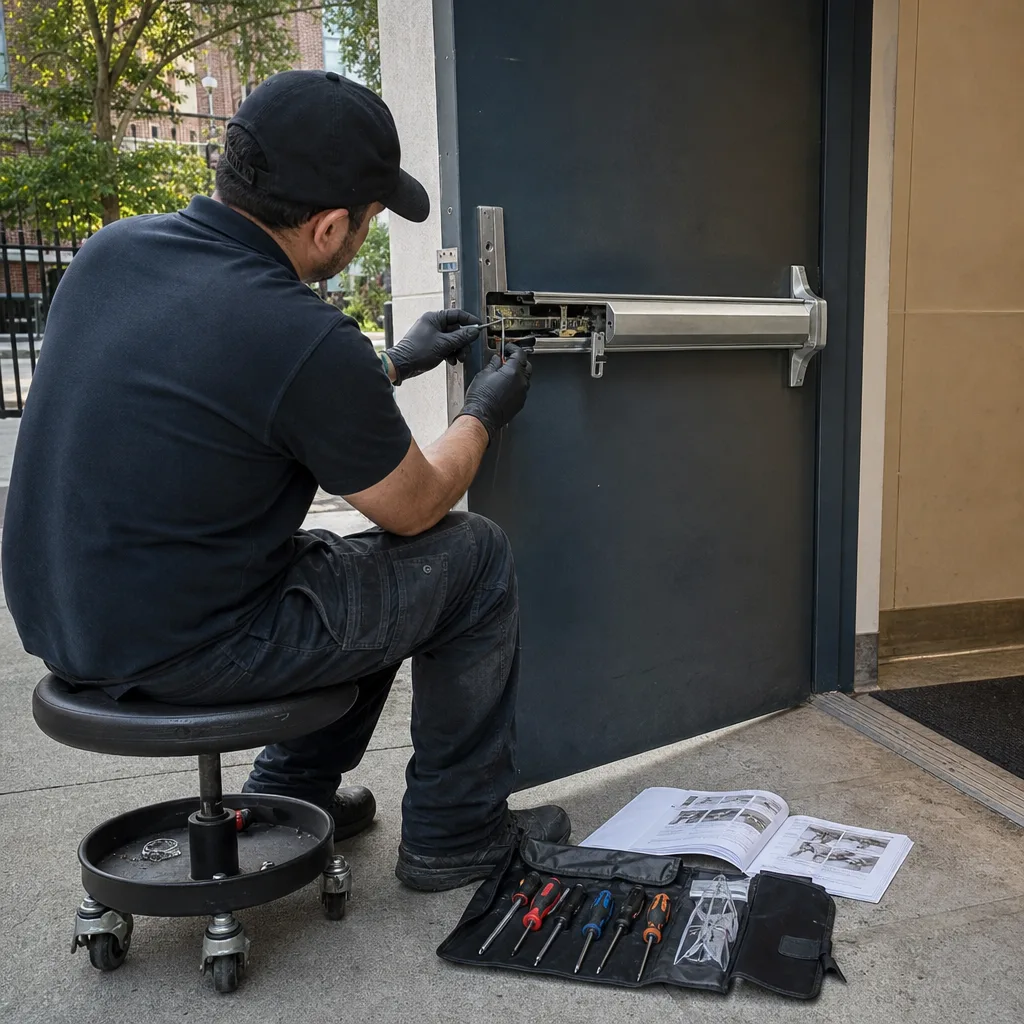
The phone call is where the scam operator extracts commitment. The goal is to get a technician to your location before you have a written price, then use time pressure to inflate the bill. A legitimate dispatcher does the opposite: they fix the price in writing before anyone travels.
These are the specific questions to ask, and the answers that should concern you.
Will you give me a flat price for this specific job?
A legitimate dispatcher asks what lock you have, what the problem is, and where you are located. They then quote a flat dollar amount: “$125 to open this lock, $95 to rekey it, $340 installed for a Schlage deadbolt with high-security cylinder.” A scam operator gives a range (“$35 to $150”), refuses to commit until “the technician assesses it,” or quotes only a service fee with labor “extra.”
Haven Standard Clause 1: the price on the phone is the price on the invoice. This rule has governed every Novak Lock & Security New York job since 2002. The technician is contractually prohibited from changing it at the door.
What is your DCA license number?
A legitimate locksmith provides this without hesitation. A scam operator deflects, claims the technician carries it, or hangs up. Write the number down and verify it while you are on the call.
Will the technician arrive in a marked vehicle?
Unmarked vehicles are a hallmark of subcontractor networks. The dispatcher may promise “a uniformed technician” but omit the vehicle. Ask directly. A legitimate company has no reason to hide this.
What is the technician’s name?
Scam operations dispatch whoever is available from a pool of independent contractors. They often cannot tell you who is coming. At Novak Lock & Security New York, we assign a specific technician to each call and provide an estimated arrival window.
Will I receive a written invoice before payment?
The answer must be yes, with itemized line items. A demand for cash-only payment, or a request to pay before seeing the invoice, is a violation of standard practice and, in many cases, of New York consumer protection law.
Arrival-Stage Red Flags: Reading the Technician and the Vehicle
The technician arrives. This is the last point before work begins where you can stop the transaction without cost. Here is what to observe.
The vehicle: It should display the company name and phone number. Not a magnetic sign slapped on a personal car. Not a blank white van. The vehicle should match what was described on the phone. In New York, parking enforcement is strict; legitimate locksmiths need marked vehicles to access commercial loading zones and residential drop-offs efficiently. An unmarked car suggests the operator is not established enough to maintain a fleet, or is deliberately concealing identity.
The ID: The technician should produce a company photo ID and, upon request, a DCA locksmith license. Not a business card. Not a generic “locksmith” badge. A photo ID with the same company name you called.
The immediate recommendation to drill: This is the most expensive and destructive option. A trained locksmith can pick or bypass most residential locks in New York, where the housing stock includes millions of pre-war mortise locks, rim cylinders, and standard deadbolts. Drilling should be rare, explained as a last resort, and quoted at a specific additional cost before proceeding. If the technician reaches for the drill within sixty seconds of arrival, you are likely facing an operator who lacks picking skill or who profits from selling you a replacement lock.
The lock brand offered: Ask what brand will be installed. Scam operators install no-name cylinders purchased in bulk, then charge premium prices. A legitimate technician names the manufacturer: Yale, Baldwin, Schlage, Medeco, Mul-T-Lock. They explain the grade: Grade 1 (commercial duty), Grade 2 (residential heavy duty), or Grade 3 (basic residential). They do not present a single option as “the only one that fits.”
The pressure to decide immediately: “I can only hold this price if we start now.” “I have another call waiting.” These are urgency tactics designed to bypass your verification. A legitimate locksmith in New York has no need to pressure you. The price is the price, regardless of when you decide.
Our Residential Locksmith in New York technicians carry factory-authorized tools for premium brands including Medeco, Mul-T-Lock, and Baldwin. We document every visit with a photo record left with the customer, per The Haven Standard. This is not a promise. It is a procedure.
Invoice-Stage Red Flags: What the Paperwork Reveals
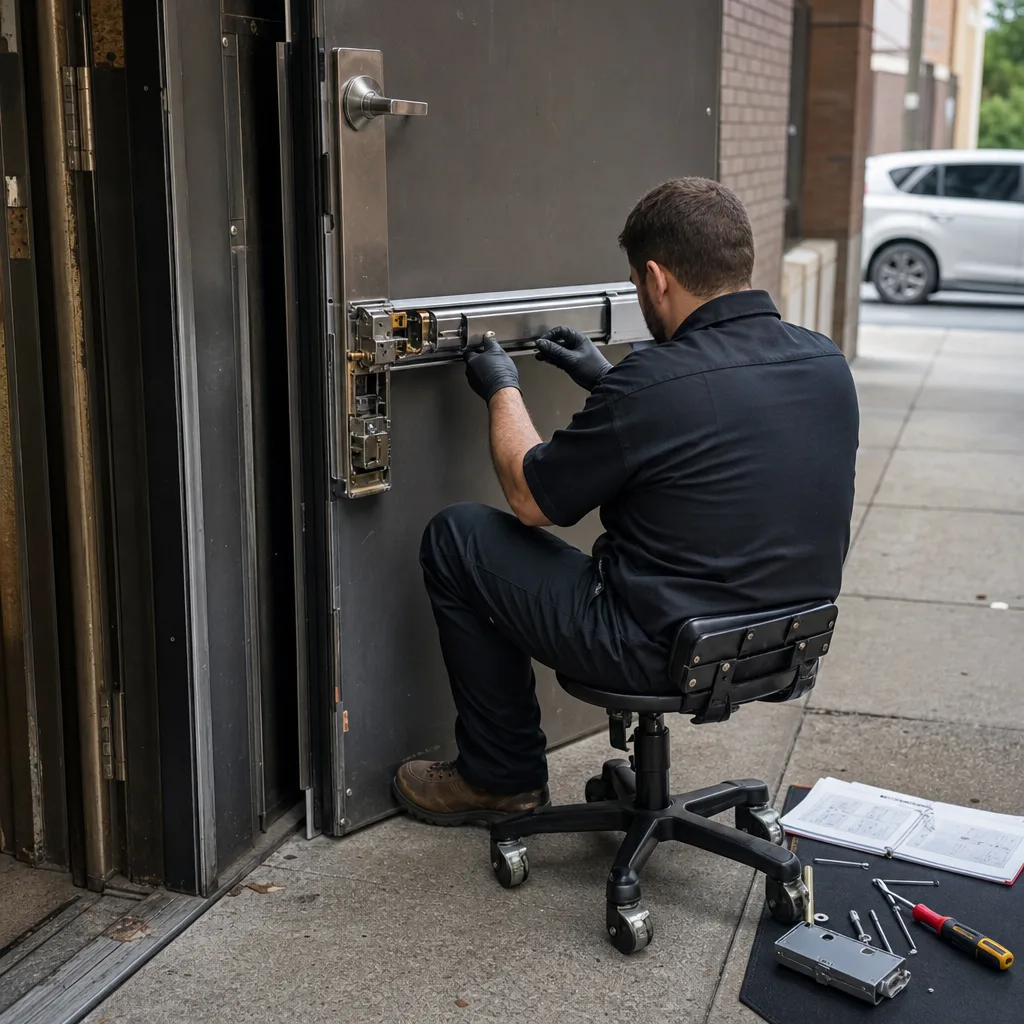
The job is done. The technician presents the invoice. This document tells you everything about the operation you just used.
Hand-written or generic receipts: A legitimate locksmith in New York provides a printed invoice with the company name, address, phone number, DCA license number, itemized labor and materials, and subtotal. A blank receipt with a handwritten total, or a generic “locksmith service” slip with no company identification, is not adequate documentation and may indicate an unlicensed operator.
Line items not quoted in advance: “Security assessment fee,” “emergency surcharge,” “tool usage fee,” “mileage.” These appear after the fact to inflate a low initial quote. Under New York consumer protection law, a final charge substantially exceeding a written or oral estimate may be actionable as deceptive practice. The key question: was this item disclosed before work began? If not, it should not be on the invoice.
The lock price versus retail: A basic Kwikset or Schlage deadbolt retails for $15-$40 at hardware stores in New York. Installed by a locksmith, with labor, warranty, and proper alignment, a Grade 2 deadbolt typically runs $180-$340. An invoice charging $400+ for a basic cylinder, or $600+ for a lock that is not high-security, warrants scrutiny. Ask for the part number and look it up.
Payment method pressure: Cash-only demands, especially with a discount for cash, often signal an operator avoiding documentation. Credit card payments create a paper trail the operator cannot easily erase. A legitimate business accepts multiple payment methods and provides a receipt for each.
No warranty documentation: The invoice should state what is warranted and for how long. The Haven Standard requires a 365-Day Done Right Promise on every lock installation, rekey, or emergency call. An invoice with no warranty language, or a verbal “call me if there’s a problem,” leaves you unprotected.
For Commercial Locksmith in New York work, the documentation standard is higher: written scope, flat per-lock pricing, and a documented photo record. The same principles apply to residential jobs.
What to Do If You’re Mid-Job and Recognize the Pattern
You are locked out in Jackson Heights at 11 PM. The technician has arrived in an unmarked car. The price has doubled from the phone quote. The drill is out. You are not obligated to continue.
Step 1: Stop the work. State clearly that you do not authorize additional work beyond what was quoted. You have the right to refuse service at any point before work is completed. Do not sign anything under pressure.
Step 2: Document everything. Photograph the technician’s ID, the vehicle, the lock before any drilling, and any invoice presented. Note the time, location, and all prices quoted. This documentation is essential for any subsequent complaint.
Step 3: Pay only the quoted price for work completed. If the technician demands more, state that you will pay the originally quoted amount and dispute the remainder. Under New York General Business Law Section 349, deceptive trade practices are actionable. The threat of a complaint to the DCA often resolves immediate disputes.
Step 4: File complaints. Report the incident to the NYC Department of Consumer Affairs, the New York State Attorney General’s office, and the Federal Trade Commission. The DCA can suspend or revoke locksmith licenses; the FTC tracks patterns across states.
Step 5: Call a verified operator. Novak Lock & Security New York answers calls with a live person 24/7. We will quote a flat price, dispatch a background-checked technician in a marked vehicle, and provide a documented photo record. If you are mid-scam, we can guide you through immediate steps while dispatching legitimate help.
How to Verify a Legitimate Locksmith in New York
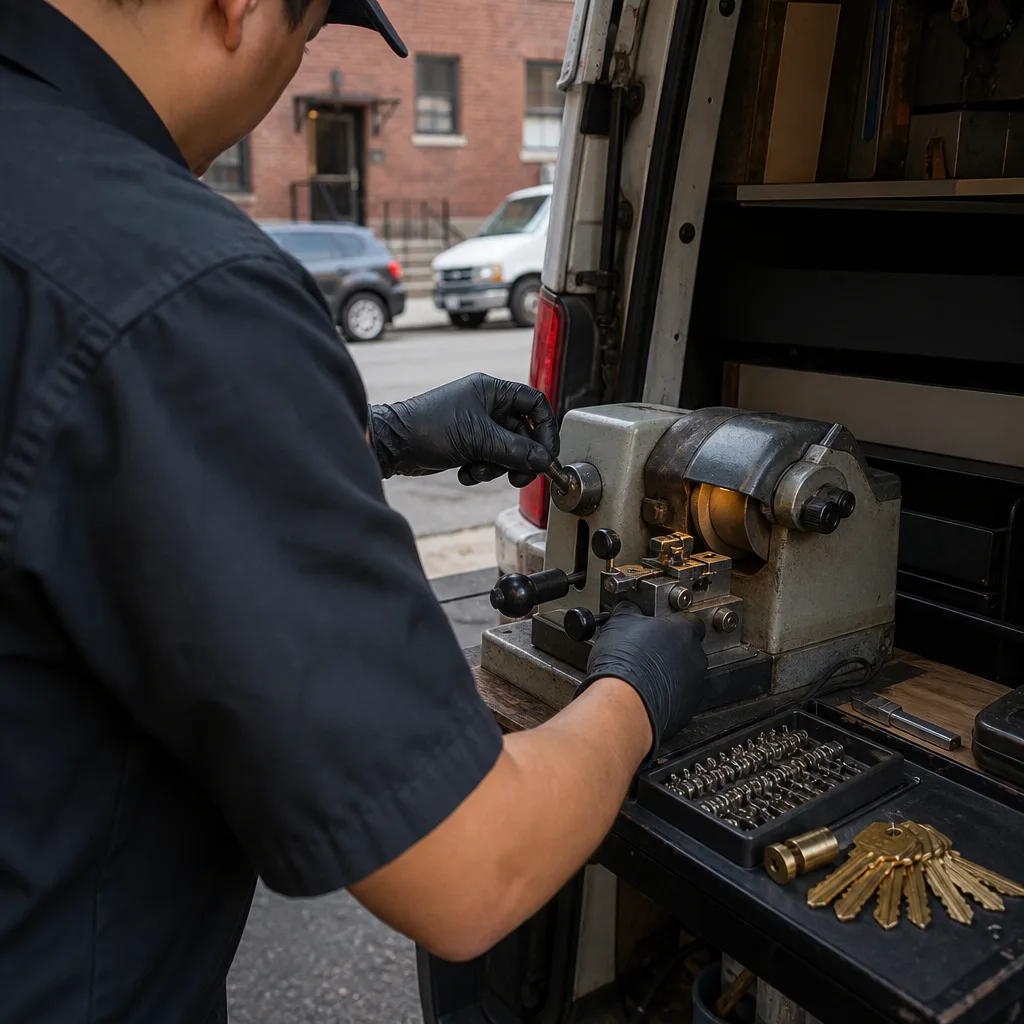
Prevention is simpler than recovery. Before you need emergency service, identify a locksmith you can call. Here is the verification checklist we recommend to every homeowner in New York.
- Verify the DCA license. Search the NYC Department of Consumer Affairs database using the business name and license number. The license should be active and match the advertised address.
- Confirm the physical location. Use Street View, or visit in person. A legitimate locksmith in New York maintains a shop or commercial office with visible signage. In neighborhoods like the East Village or Bed-Stuy, where storefronts are compact, the operation should still be identifiable.
- Check for documented history. Look for reviews that mention specific technician names, specific prices, and specific outcomes. Vague five-star reviews with no detail are often purchased. Three-star and four-star reviews with specific complaints and responses are more reliable indicators of real operation.
- Test the phone call. Call with a hypothetical scenario and request a flat price. A legitimate dispatcher will ask clarifying questions and commit to a number. A scam operator will resist.
- Ask about documentation. Will you receive a written invoice? A photo record? Warranty paperwork? The answer should be yes to all three, with specifics on timing.
- Request brand authorization. If you have high-security needs, ask if the locksmith is factory-authorized for Medeco, Mul-T-Lock, or Abloy. Authorization requires training and background checks by the manufacturer. It cannot be faked.
Novak Lock & Security New York meets every item on this list. We have since 2002. Our Access Control Systems in New York work requires the same verification standard: written scope, flat pricing, documented completion.
Common Mistakes to Avoid
- Searching only in an emergency. The worst time to evaluate a locksmith is when you are locked out in the rain. Identify a verified operator now, save the number, and avoid the 11 PM panic search that leads to scam ads.
- Trusting Google Local Services badges alone. Google’s verification checks business registration and insurance, but does not prevent address spoofing or subcontractor networks. Cross-check the address independently.
- Accepting a “service call” as the total price. In New York, a service call covers arrival only. Labor, parts, and emergency fees are additional. A legitimate dispatcher breaks these out. A scam dispatcher hides them.
- Assuming a local area code means local operation. VoIP numbers can display any area code. The address verification and DCA check matter more than the phone prefix.
- Signing a blank or incomplete invoice. Never sign a document with blank fields. The technician can fill in any amount after you leave. Insist on a complete, itemized invoice before payment.
- Letting a tenant or roommate handle the call. If you are not present, authorize a specific dollar maximum in writing. Scam operators exploit the absence of the decision-maker to inflate charges.
- Ignoring the warranty. A one-year warranty on parts and labor is standard for legitimate locksmith work in New York. Shorter warranties, or no written warranty, suggest the operator does not expect to be reachable later.
When to Call a Professional
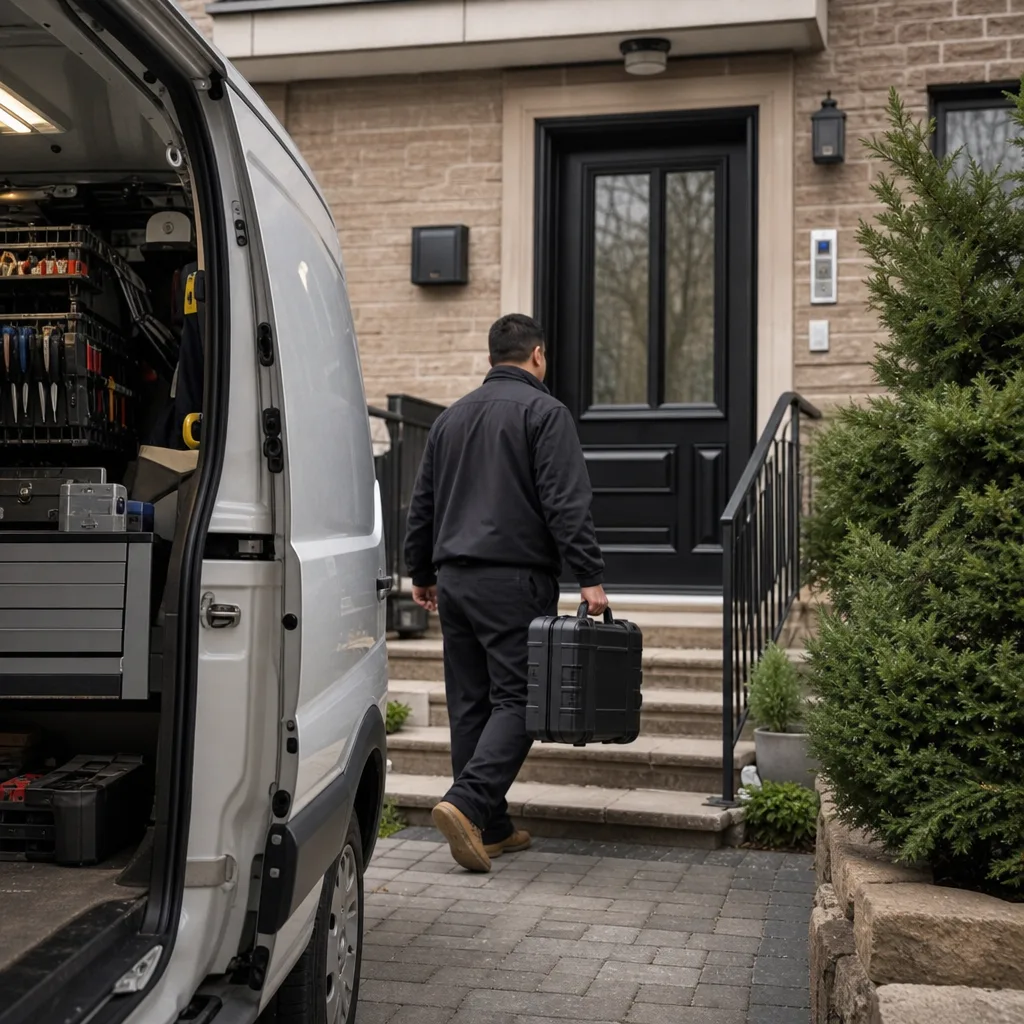
Call a professional locksmith when you are locked out, when your lock is malfunctioning, when you have lost keys and cannot account for who has copies, or when you are moving into a new home and need the locks rekeyed. In New York, where rental turnover is high and previous tenants may retain keys, rekeying is standard practice at every move. A professional rekey typically runs $65-$125 per cylinder, quoted in writing before work starts.
Call a professional when you need security upgrades: high-security cylinders that resist picking and bumping, smart lock installation with proper door preparation, or master key systems for multi-unit buildings. Call when you need access control for commercial properties, with scheduled surveying and flat per-lock pricing.
Novak Lock & Security New York offers free estimates in New York. Call (551) 214-0800. We will quote a flat price, dispatch a background-checked technician in a marked vehicle, and provide a documented photo record. The price on the phone is the price on the invoice. It has been that way since 2002.
Frequently Asked Questions
A residential lockout in New York typically costs $85-$150 during standard hours and $120-$200 overnight, quoted as a flat price before dispatch. Rekeying runs $65-$125 per cylinder. Lock installation ranges from $180-$340 for Grade 2 deadbolts and $400-$800 for high-security cylinders like Medeco or Mul-T-Lock, including labor and warranty. Call (551) 214-0800 for an exact quote - estimates are free.
At Novak Lock & Security New York, yes. Haven Standard Clause 1 prohibits the technician from changing the price at the door. The price quoted is the price on the invoice, with no exceptions since 2002. If a competitor has given you a written estimate, we offer a free second opinion.
Ask for the DCA license number and verify it in the NYC Department of Consumer Affairs database. A legitimate locksmith provides this without hesitation. The license should be active and match the business name and address. No number, or a number that does not verify, is a stop sign.
Drilling destroys the lock, forcing you to buy a replacement at inflated prices. It also requires less skill than picking or bypassing. A trained locksmith can open most residential locks without drilling. In New York’s pre-war housing stock, with millions of mortise locks and rim cylinders, non-destructive entry is standard practice for legitimate operators.
Document everything: photos, receipts, the technician’s description, vehicle details. File a complaint with the NYC DCA, the NYPD if fraud is involved, and your credit card company if you paid by card. New York consumer protection law provides remedies for deceptive trade practices. Then call a verified operator to properly secure your property.
Many smart locks are designed for homeowner installation, but New York’s older doors often require modification: boring for deadbolts where none exist, adjusting strike plates, or reinforcing thin door frames. Improper installation creates security gaps and can void the lock’s warranty. A professional assessment ensures correct fit and function. We quote this in writing before any work begins.
The Bottom Line
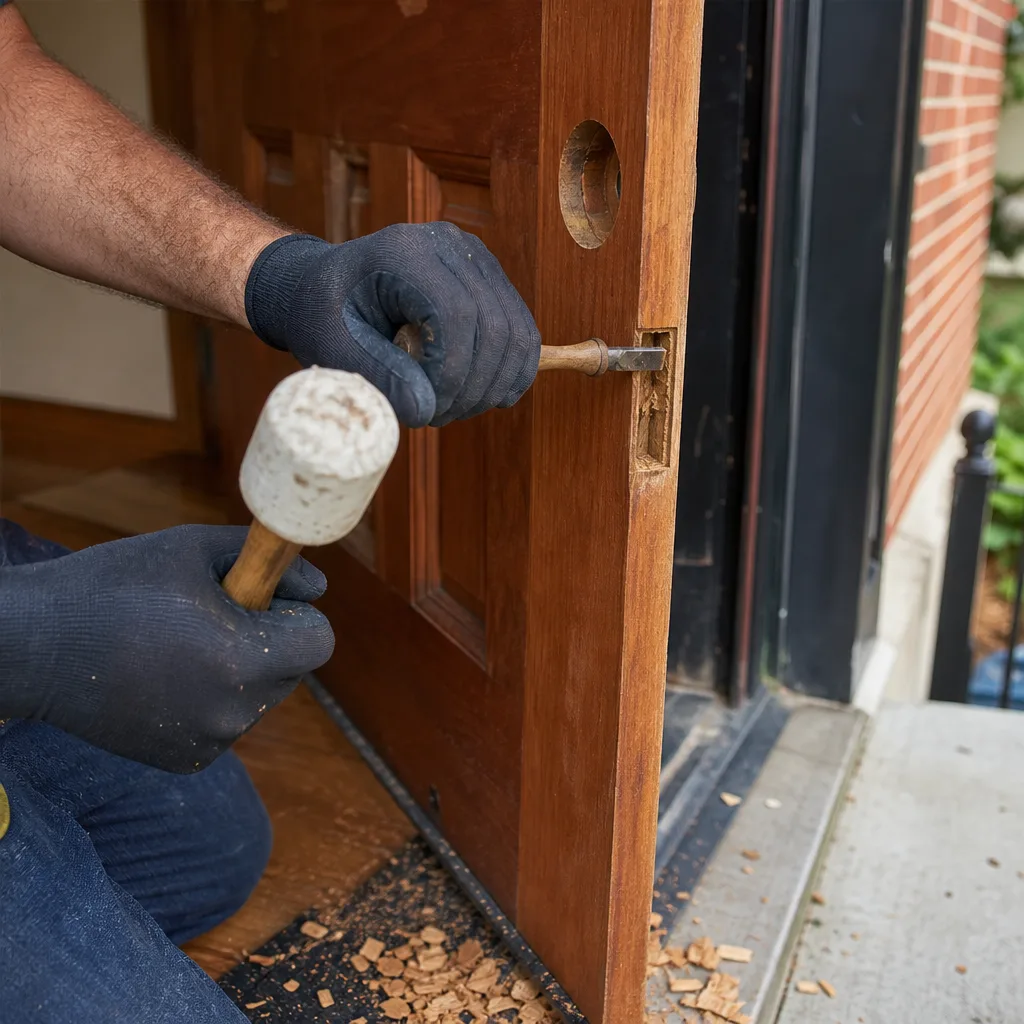
Locksmith fraud in New York is identifiable and preventable. The four-stage pattern, ad through invoice, has specific warning signs at each point. Verify the address, demand a flat price, check the vehicle and ID, and read the invoice before you pay. The operators who refuse these checks are the ones with something to hide. The operators who welcome them, who put the price in writing and stand by it, are the ones who have built a business on repeat customers rather than one-time extraction. Since 2002, Novak Lock & Security New York has operated under a single rule: the price on the phone is the price on the invoice. No exceptions. No surprises.
Written by Daniel Novak, Owner at Novak Lock & Security New York, serving New York since 2002.