
Last updated September 25, 2026
Non-destructive entry first, always - and we re-key Schlage, Kwikset, and Baldwin locks on the spot while you watch
You get a price before we start. It does not change when we arrive. No surprises.
Locksmith Permits, Codes & Inspections in NY: What You Need to Know
Installing a smart lock with an electric strike on a rent-stabilized apartment in New York can constitute an illegal alteration under the NYC Housing Maintenance Code - a fact neither the lock manufacturer nor most locksmiths will volunteer. Most New York homeowners assume a locksmith’s DCA license covers everything. It does not. Certain lock installations sit at the intersection of locksmith, electrician, and building code jurisdiction in ways that can void a lease, trigger a Department of Buildings violation, or complicate a certificate of occupancy. This guide draws the actual lines: which jobs need permits, which codes apply, and what documentation to demand before anyone drills a hole. For Locksmith Warning Signs: A New York Homeowner’s Reference Guide, see our companion piece.
Quick Answer
In New York, a licensed locksmith’s DCA license covers mechanical lock installation, rekeying, and standard deadbolt replacement without a building permit. Work crosses into permit territory when it involves electrical components (electric strikes, magnetic locks, access control wiring), structural door modifications in multiple dwellings, or alterations to rent-stabilized units that change the original lock type. For permitted work, a New York-licensed locksmith may perform the installation, but the project requires either a registered design professional’s sign-off or a licensed electrician’s involvement, depending on the scope.
Table of Contents
- DCA License vs. Building Permit: Where the Line Falls
- NYC Housing Maintenance Code: What Owners Must Provide
- Electric Strikes and Access Control: When an Electrician Joins the Job
- Local Law 11 and Facade Work: Exterior Hardware on Larger Buildings
- Rent-Stabilized Units: Special Rules for Lock Changes
- Documentation to Demand After Any Installation
- Permit Requirements by Borough and Building Type
- Common Mistakes to Avoid
- When to Call a Professional
- Frequently Asked Questions
- The Bottom Line
DCA License vs. Building Permit: Where the Line Falls
The New York City Department of Consumer and Worker Protection (DCWP) licenses locksmiths through its Division of Consumer Affairs. A DCA license - the common term, though the agency is now DCWP - permits a technician to open locks, install mechanical hardware, rekey cylinders, and perform standard residential and commercial locksmith work. What it does not permit is work defined as “construction” or “electrical” under the New York City Building Code or Electrical Code.
Here’s the practical breakdown we’ve used since 2002:
| Work Type | DCA License Sufficient? | Additional Requirement |
|---|---|---|
| Standard deadbolt installation (mechanical only) | Yes | None |
| Lock rekeying or cylinder replacement | Yes | None |
| High-security cylinder upgrade (Abloy, Medeco, Mul-T-Lock) | Yes | None |
| Electric strike installation | No - electrician required | Licensed electrician for low-voltage wiring; permit if new circuit |
| Magnetic lock (maglock) with motion sensor | No - electrician required | Licensed electrician; possible DOB permit |
| Intercom integration with door release | No - electrician required | Licensed electrician; building system coordination |
| Door modification in multiple dwelling (cutting, welding) | No - permit required | DOB permit; possible registered architect or PE sign-off |
| Fire-rated door hardware replacement | Yes, with caveat | Must maintain UL fire rating; label documentation required |
The gray zone catches most property owners. A Schlage deadbolt on a single-family home in Riverdale? Pure locksmith work. The same deadbolt on a rent-stabilized unit in Washington Heights, where the existing lock was a mortise set with an integrated latch and the new hardware requires door modification? That may need Housing Preservation and Development (HPD) notification, and if the door is fire-rated, the replacement must carry a matching UL label or the building fails inspection.
We’ve arrived at jobs in Brooklyn where a previous installer - unlicensed, working off a Craigslist ad - replaced fire-rated corridor locks with residential-grade Kwikset deadbolts. The hardware functioned. The building failed its annual inspection because the labels didn’t match. The property manager paid twice: once for the wrong installation, once for us to source correct Sargent hardware with proper fire ratings and reinstall to code.
Commercial Locksmith in New York work amplifies these concerns. Commercial tenants often assume their locksmith can add any hardware their insurance requires. The locksmith can install it. Whether the installation satisfies the certificate of occupancy, the fire marshal’s inspection, and the building’s insurance survey is a separate question - one that hinges on permits and documentation, not merely mechanical skill.
NYC Housing Maintenance Code: What Owners Must Provide
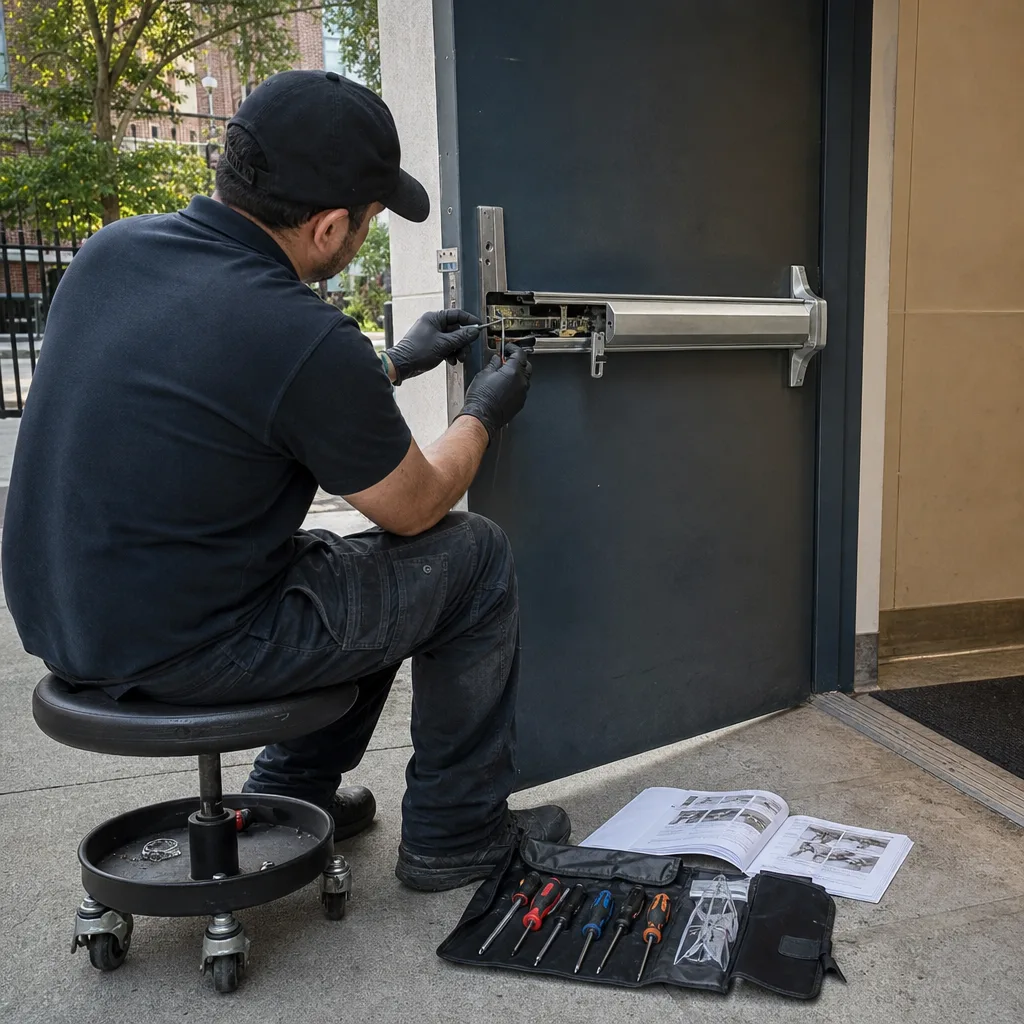
Section 27-2043 of the New York City Housing Maintenance Code creates obligations that many property owners and even some locksmiths misunderstand. The code specifies that in multiple dwellings - buildings with three or more residential units - the owner must provide and maintain a locking device on each entrance door to every dwelling unit. The lock must be equipped with a heavy-duty latch set and a heavy-duty dead bolt operable by both a key from the outside and a thumb-turn from the inside.
The specific requirements matter:
- Latch set and deadbolt as separate functions or integrated. A single-cylinder lock that performs both functions satisfies the code if it is rated heavy-duty. Residential-grade hardware often is not.
- Key operation from outside, thumb-turn from inside. Double-cylinder deadbolts - key required on both sides - violate the code in multiple dwellings because they impede emergency egress. We’ve removed these from pre-war buildings in the West Village where previous owners installed them for perceived security.
- Tenant notification for lock changes. When an owner changes or rekeys a lock, the owner must provide each tenant with a key and notice of the change within a specified timeframe. The locksmith does not perform this notification, but the locksmith’s invoice often becomes evidence in disputes over whether proper notice occurred.
- Building entrance doors. The code also requires automatic self-closing and self-locking devices on main entrance doors. The locksmith who services these must understand the difference between a code-compliant lobby lock and a convenience upgrade.
The “heavy-duty” specification is where we see the most variation in New York. A Grade 3 residential deadbolt from a big-box store does not satisfy the code for a multiple dwelling. Grade 2 is the minimum; Grade 1 is standard for professional installation in rental buildings. We specify Residential Locksmith in New York jobs by grade: Grade 1 for multiple dwellings, Grade 2 acceptable for owner-occupied two-families, with the documentation to prove it.
In our experience, HPD inspectors in the Bronx and upper Manhattan check cylinder grades more carefully than in some other boroughs. We’ve had property managers in Mott Haven call us after HPD flagged Schlage B60N deadbolts - excellent residential hardware, but Grade 2, and the inspector wanted Grade 1 documentation for a six-unit building. The replacement cost was minor. The violation record was not.
Electric Strikes and Access Control: When an Electrician Joins the Job
The New York City Electrical Code defines electrical work broadly. Any installation, alteration, or repair of electrical conductors, raceways, or equipment requires a licensed electrician. An electric strike - the device that releases a door latch when an electrical signal is applied - is electrical equipment. So is a magnetic lock. So is the wiring running from an intercom to a door release button.
This does not mean a locksmith cannot touch these devices. It means the locksmith cannot perform the electrical work alone, and the project may require a permit from the Department of Buildings.
Three scenarios illustrate the boundary:
Scenario one: Electric strike on existing low-voltage doorbell wiring. A locksmith can install the strike mechanism in the door frame. A licensed electrician must verify the transformer, wire gauge, and connection method. If the existing wiring is 16-volt doorbell cable and the strike requires 24 volts AC, the electrician upgrades the circuit. No DOB permit if no new wiring is run; electrician’s sign-off suffices.
Scenario two: New magnetic lock with motion sensor and push-to-exit button. This is new electrical work. A licensed electrician must pull permits, run conduit if required by code, install the power supply, and sign off. The locksmith mounts the lock, aligns the armature plate, and integrates the hardware with the door. We coordinate with electricians we’ve worked with in Queens and Brooklyn on these jobs; the customer receives one invoice from us, with the electrical portion clearly subbed and documented.
Scenario three: Intercom system with door release, integrated with building access control. The locksmith’s role ends at the door hardware. The electrician handles all wiring to the panel. The access control vendor - often a separate specialty - programs credentials. In New York co-op buildings, especially pre-war structures on the Upper West Side, this three-party coordination is standard. The mistake is hiring a locksmith who claims to handle “everything” and then subcontracts blindly without documentation.
Access Control Systems in New York require this coordination by design. Our proposals for access control work specify exactly what Novak Lock & Security performs (hardware, cylinders, keying schedules) and what requires a licensed electrician (all wiring, power supplies, integration with building systems). The customer sees the boundary before signing.
One more detail: NYC Electrical Code requires that low-voltage wiring in commercial occupancies be installed by a licensed electrician or under their direct supervision. The “low voltage doesn’t count” myth persists among handymen and some locksmiths. It is incorrect. We’ve been called to repair electric strikes in Midtown office buildings where unlicensed installers used speaker wire for 24-volt strikes, creating fire hazards and insurance liabilities.
Local Law 11 and Facade Work: Exterior Hardware on Larger Buildings
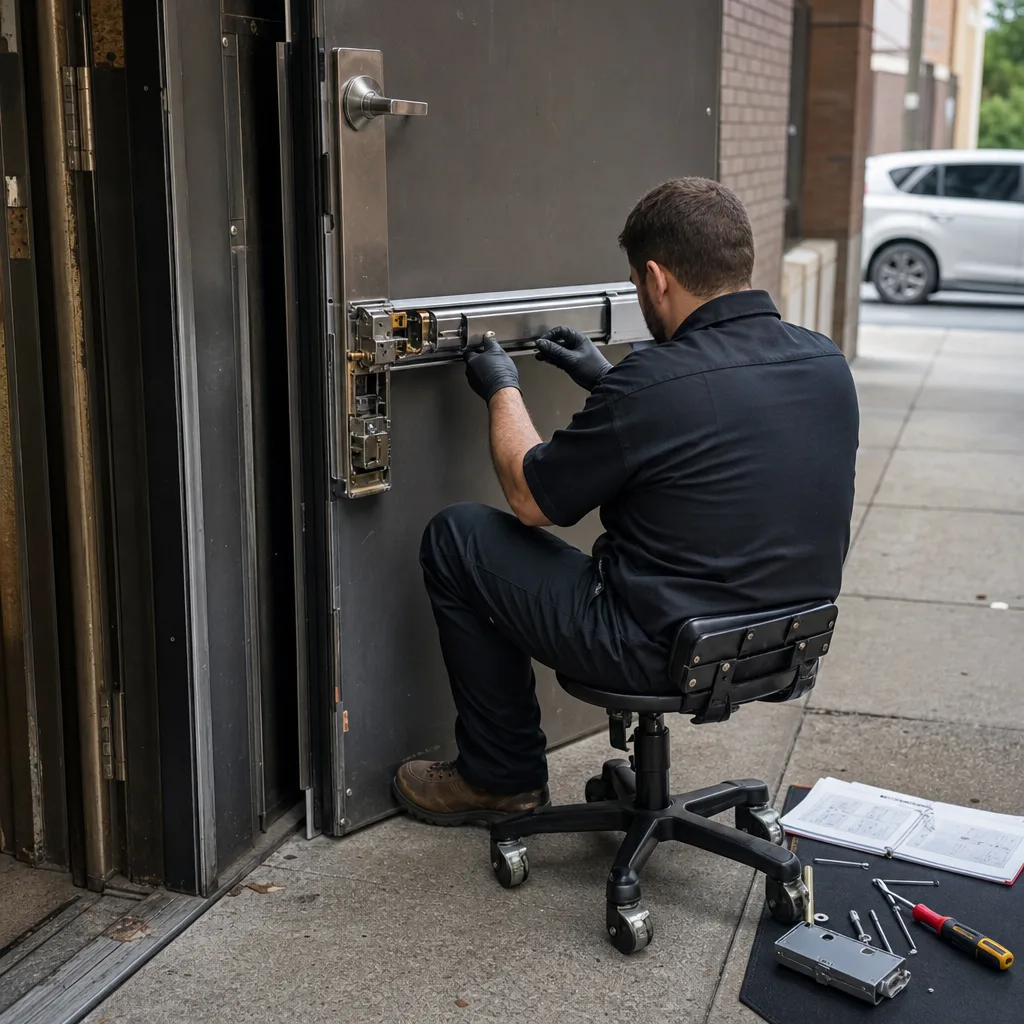
Local Law 11 of 1998, now the Facade Inspection Safety Program (FISP), requires periodic inspection of building exteriors for structures over six stories. Most property owners associate this with brick, mortar, and balcony railings. Fewer understand how exterior door hardware intersects with facade inspection requirements.
The connection is indirect but real. FISP inspectors examine “appurtenances” - attached elements that could detach and fall. A projecting panic bar, a damaged door closer arm, or corroded exterior hardware on a rooftop access door can trigger a FISP violation if the inspector judges it a falling hazard. More commonly, door hardware issues surface during the repair work that follows FISP findings.
When a FISP inspection identifies facade work, the contractor performing repairs needs access. If the access door’s lock is inoperable, corroded, or non-compliant with current egress codes, the door itself becomes a sub-project. We’ve replaced exterior hardware on commercial buildings in Long Island City after FISP cycles, where the original 1980s panic devices no longer met current ADA egress force requirements. The hardware replacement required no separate permit, but the work had to be documented for the building’s FISP file - proof that the repair was completed and the door remained code-compliant.
For buildings undergoing FISP repairs, we recommend inspecting all exterior access doors during the same cycle. The marginal cost of replacing a corroded Sargent rim exit device while scaffolding is up is far lower than mobilizing again for a separate call. We document these replacements with photos, hardware specifications, and installation dates - the same documentation package we provide on every job, aligned with The Haven Standard. For related guidance, see our Seasonal Locksmith Care for New York: Year-Round Homeowner’s Guide.
Rent-Stabilized Units: Special Rules for Lock Changes
Rent stabilization in New York creates a parallel regulatory system that governs lock changes more strictly than market-rate housing. The Division of Housing and Community Renewal (DHCR) and HPD share oversight, and the rules affect both owners and locksmiths.
The core principle: alterations that change the “essential nature” of the apartment or its security require DHCR approval or notification, depending on the building’s regulatory status. A lock change from one mechanical deadbolt to another equivalent deadbolt typically does not trigger this. A change from a mechanical lock to a smart lock with logging capability, or the addition of an electric strike that integrates with building systems, may.
Specific rules we navigate:
- Owner-provided locks must remain owner-maintained. If a tenant installs their own smart lock and it fails, the owner may not be obligated to repair it - but the owner remains obligated to provide code-compliant locking hardware under Section 27-2043. We’ve removed tenant-installed August and Yale smart locks from rent-stabilized units in Astoria where the devices malfunctioned and the owner needed to restore code-compliant mechanical hardware.
- Key duplication and master keying. In buildings with master key systems, any change affects the entire key hierarchy. We maintain master key records for multiple rent-stabilized buildings in Washington Heights and Inwood, where a single rekey of one unit requires updating the building’s keying schedule and notifying the property manager of all affected locks.
- Documentation for DHCR proceedings. Lock changes become evidence in rent overcharge and reduction-in-service cases. We provide dated invoices with hardware specifications, installation photos, and technician signatures - documentation that has been subpoenaed in DHCR proceedings and held up as reliable.
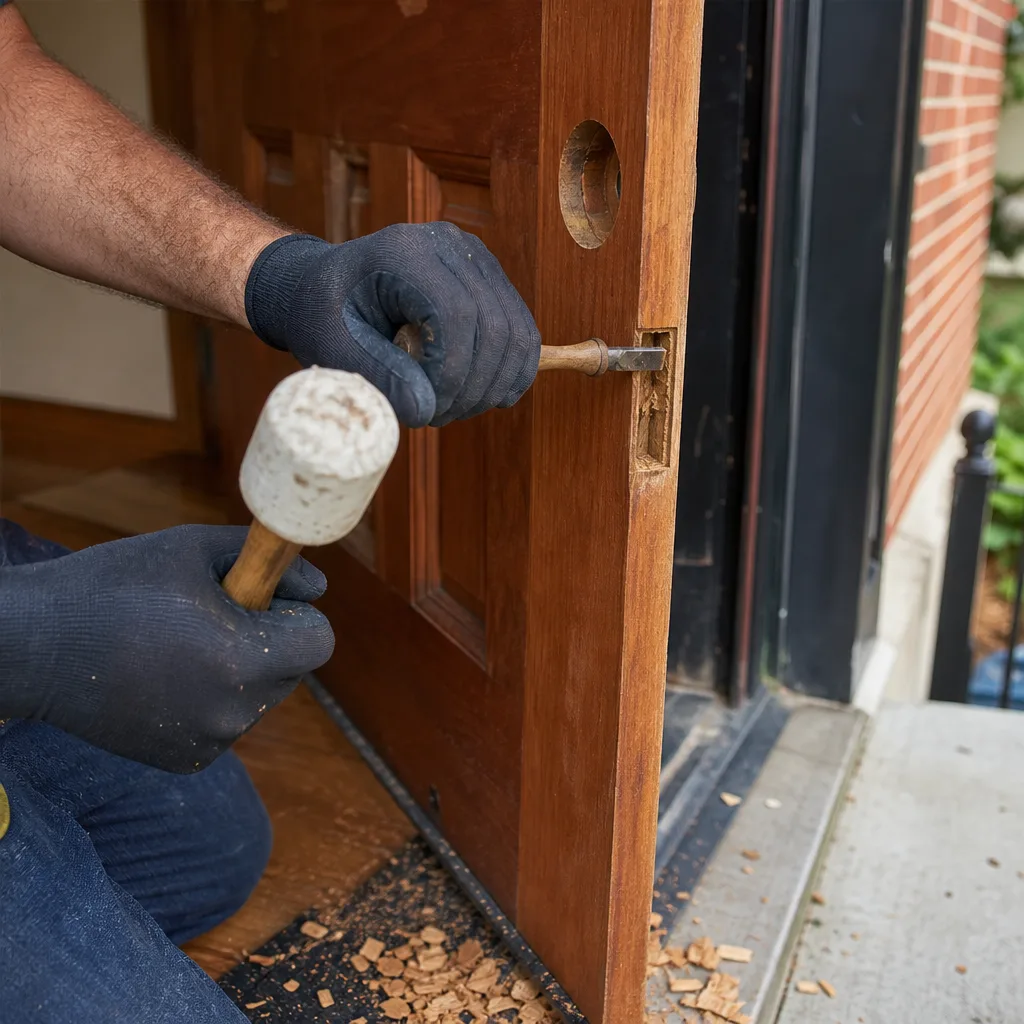
- Retrofitting pre-war doors. Many rent-stabilized buildings in New York have 1-3/4 inch solid wood doors with mortise locks. Modern deadbolts require 2-1/8 inch bore holes. Drilling that hole in a pre-war door in a landmark district or a rent-stabilized building may constitute an alteration requiring approval. We assess the door first and recommend solutions - often a high-security cylinder in the existing mortise case - that avoid the issue.
The mistake we see repeatedly: a tenant or owner installs hardware that looks better but violates the regulatory framework. The fix costs more than the original installation. The documentation gap compounds the problem.
Documentation to Demand After Any Installation
Every lock installation in New York should conclude with a documentation package. Not a receipt - a record. This package protects the property owner in inspections, insurance claims, tenant disputes, and future service calls. It also separates professional work from the undocumented installations that create liability.
We provide this on every job, governed by Haven Standard Clause 4: documented photo record, written scope, written warranty. Here is what to demand, and why each item matters:
- Make, model, and finish of installed hardware. For code compliance, the specific model number proves the grade and rating. “Schlage deadbolt” is insufficient. “Schlage B660P, Grade 1, satin chrome” is what an inspector or insurance adjuster needs.
- Cylinder type and keyway. High-security cylinders (Abloy, Medeco, Mul-T-Lock) carry patent-protected keyways. The documentation should state the keyway designation and whether the cylinder is keyed alike, keyed different, or master-keyed. This prevents future locksmiths from drilling a cylinder they cannot identify.
- Fire rating documentation. If the door is fire-rated, the hardware must carry a matching UL or Warnock Hersey label. The documentation should state the door’s fire rating and the hardware’s listing. We photograph the label in place; the photo becomes part of the record.
- Installation photos. Before, during, and after. We leave a documented photo record with every customer - not emailed later, not available on request, but handed over at job completion. This is standard, not an upgrade.
- Written warranty terms. Our 365-Day Done Right Promise applies to all installations. The documentation states the coverage period, what it includes (defects in workmanship, hardware failure under normal use), and how to invoke it.
- Key control register. For master-keyed systems or restricted keyways, the register tracks who holds which keys. We maintain this for commercial clients and multi-unit residential buildings; it is updated with every rekey.
For New York property managers, this documentation package is the difference between passing an HPD inspection and scrambling for records. We’ve had clients in the Bronx produce our ten-year-old invoices to prove that a lock was code-compliant when installed - evidence that resolved a dispute.
Permit Requirements by Borough and Building Type
New York City administers building permits through the Department of Buildings, but enforcement patterns and supplementary requirements vary by borough and building department. Understanding these variations prevents delays and violations.
Manhattan: The DOB Manhattan office processes the highest volume of permits. For door modifications in landmark districts or historic districts - Greenwich Village, the Upper West Side, parts of Harlem - Landmarks Preservation Commission (LPC) approval may be required before DOB will issue a permit. We’ve coordinated LPC approvals for hardware changes on designated buildings where the original hardware was specified in the landmark designation. The process adds 2-4 weeks but is non-negotiable.
Brooklyn and Queens: These boroughs have the highest concentration of pre-war multiple dwellings. HPD enforcement of Housing Maintenance Code Section 27-2043 is active, particularly in rent-stabilized concentrations like Ridgewood, Jackson Heights, and Crown Heights. Permits for door modifications are less frequently required than in Manhattan, but HPD violations for non-compliant hardware are common. Property managers in these areas should also consult our Commercial Locksmith Maintenance Checklist for New York Homeowners.
The Bronx: HPD enforcement is stringent. We’ve observed more frequent HPD inspections in the Bronx than in other boroughs for multiple dwellings, particularly in buildings with prior violations. Documentation of hardware grade is essential.
Staten Island: Single-family and two-family homes dominate. DOB permits for door modifications are rarely required for residential locksmith work. The primary concern is compliance with NYC Building Code for egress, particularly in basement conversions and accessory dwelling units.
Special cases:
- Cooperative apartments: The co-op board, not the city, may regulate lock changes. Many boards require identical hardware across units for aesthetic consistency. We work with building management to specify approved hardware before installation.
- Condominiums: Similar to co-ops, but the declaration and bylaws govern. Some Manhattan condos require key fob systems with specific protocols; we coordinate with the building’s access control vendor.
- New construction and major alterations: All lock installation is part of the larger permit. The locksmith works under the general contractor’s permit, with hardware specified in the construction documents.
Common Mistakes to Avoid
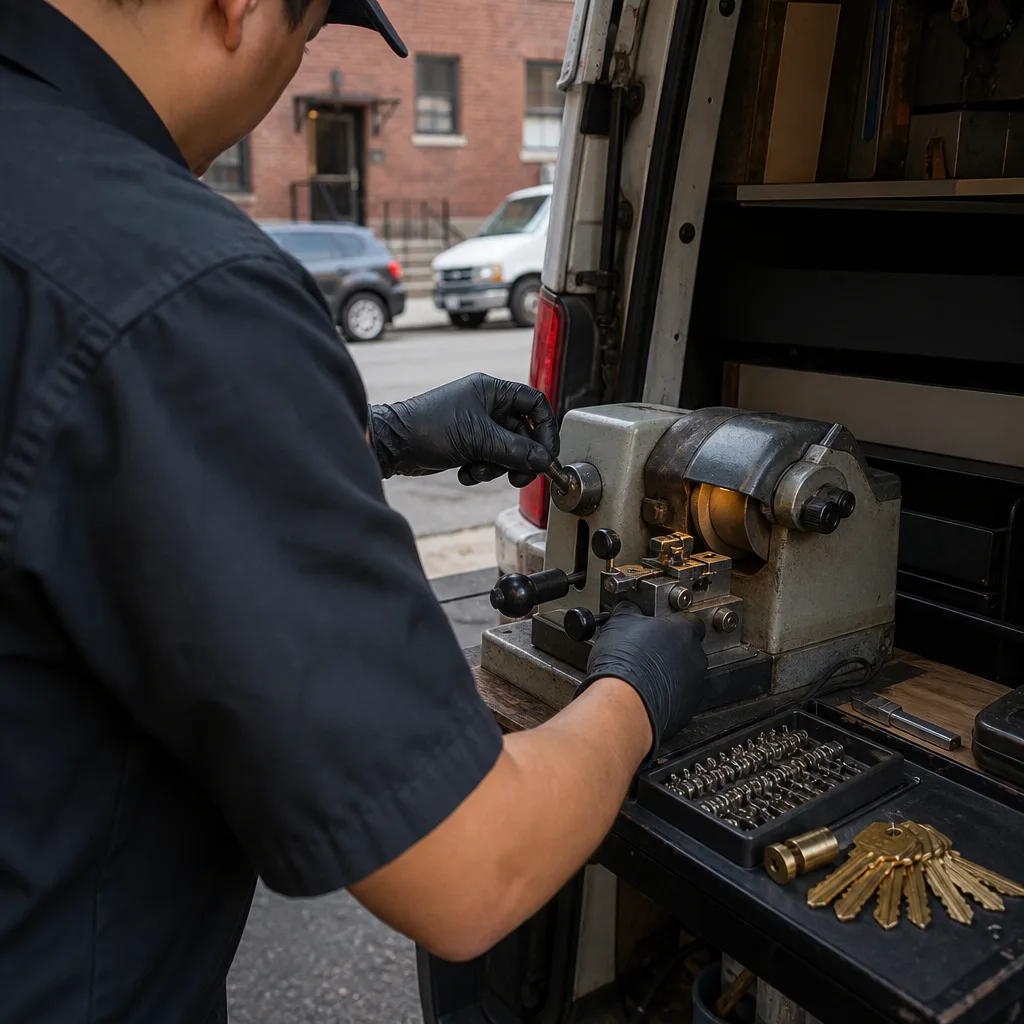
- Assuming a DCA license covers electrical work. We’ve repaired electric strikes installed by locksmiths who ran their own 24-volt wiring. The strikes worked until they didn’t, and the unlicensed electrical work voided the building’s insurance coverage for the door.
- Installing double-cylinder deadbolts in multiple dwellings. These violate Housing Maintenance Code Section 27-2043 and create egress hazards. We remove them regularly from pre-war buildings where previous owners prioritized security over code compliance.
- Neglecting fire rating documentation. A fire-rated door with non-rated hardware fails inspection. We photograph UL labels in place; without that photo, the inspector has no evidence of compliance.
- Changing locks on rent-stabilized units without owner notification protocols. The locksmith’s invoice becomes evidence in DHCR proceedings. Incomplete documentation - no date, no hardware specification, no proof of tenant notification - weakens the owner’s position.
- Hiring based on lowest phone quote without verifying license status. DCWP license verification is free online. Unlicensed locksmiths in New York frequently subcontract to unvetted technicians and disappear when problems arise.
- Ignoring Local Law 11 implications for exterior hardware. A projecting or damaged panic bar can become a FISP violation. Inspect exterior hardware during the same cycle as facade repairs.
- Failing to request a written price before work starts. This is not merely a consumer protection issue. A written scope with hardware specifications prevents disputes about what was installed and whether it satisfies code.
When to Call a Professional
Call a licensed locksmith when the work involves mechanical hardware: lock installation, rekeying, cylinder replacement, safe work, key duplication for restricted keyways. Call a licensed electrician when the work involves wiring, transformers, or integration with building electrical systems. Call both, coordinated, when the project spans both domains - electric strikes, magnetic locks, intercom-integrated releases.
For any installation in a multiple dwelling, rent-stabilized unit, or commercial building with certificate of occupancy concerns, verify that the locksmith understands the applicable code sections and provides documentation. Ask specifically: What grade is this hardware? Is this door fire-rated, and does this hardware carry the matching label? Will I receive photos and a written scope?
Novak Lock & Security New York offers free estimates in New York - call (551) 214-0800. We quote a firm price on the phone, and Haven Standard Clause 1 prohibits our technicians from changing it at the door. Every job includes a documented photo record, written warranty, and hardware specification. Since 2002, we’ve installed or serviced 60,000+ locks, keys, and systems - every one with a written price before we started and a documented record when we left.
Frequently Asked Questions
No - a licensed locksmith with a valid DCWP license can change mechanical locks without a building permit. If the work involves electrical components, structural door modification, or alterations to a rent-stabilized unit that changes the lock type, additional permits or professional sign-offs may be required. Call (551) 214-0800 for a free estimate and we’ll tell you exactly what your job requires.
Section 27-2043 requires owners of multiple dwellings to provide and maintain a heavy-duty latch set and deadbolt on every dwelling unit entrance door, operable by key from outside and thumb-turn from inside. Double-cylinder deadbolts are prohibited. The hardware must be Grade 2 minimum, Grade 1 recommended. We specify and document the grade on every installation.
It depends. A smart lock that replaces a mechanical deadbolt with equivalent function may not require DHCR approval, but the owner remains responsible for maintaining code-compliant hardware. Smart locks with logging, remote access, or building system integration may constitute an alteration requiring notification or approval. We assess the specific device and regulatory status before installing.
Yes. The NYC Electrical Code requires licensed electrician involvement for any electrical work, including low-voltage wiring to electric strikes. A locksmith can install the strike mechanism; the electrician must verify or install the power supply and wiring. We coordinate with licensed electricians on these jobs and specify the division of work in our written proposals.
Demand: make, model, and finish of hardware; cylinder type and keyway; fire rating documentation if applicable; installation photos; written warranty terms; and key control register for master-keyed systems. We provide all of these as standard on every job, per Haven Standard Clause 4.
Search the DCWP license database online using the business name or license number. A legitimate locksmith provides this information without hesitation. Unlicensed operators often use generic names, refuse to provide license details, or quote prices that change dramatically on arrival - the exact practice our Clause 1 prohibition was designed to prevent.
At Novak Lock & Security, yes. Haven Standard Clause 1 states: the price on the phone is the price on the invoice. Our technicians are contractually prohibited from changing it at the door. This rule has been in place since 2002. If the scope changes because conditions differ from what was described, we stop work, call the dispatcher, and obtain customer approval for any revision before continuing.
The Bottom Line
A locksmith’s license in New York authorizes mechanical work, not everything related to doors and security. The boundary between locksmith work, electrical work, and regulated construction is defined by the New York City Building Code, Electrical Code, and Housing Maintenance Code - not by what a technician is willing to attempt. Property owners who understand these boundaries avoid violations, insurance gaps, and the cost of redoing non-compliant work. The documentation you receive matters as much as the installation itself: make, model, grade, fire rating, photos, and written warranty. Demand it. Verify licenses. And never accept a price that isn’t fixed in writing before work begins. Explore more guides & resources on New York locksmith regulations and property management.
Written by Daniel Novak, Owner at Novak Lock & Security New York, serving New York since 2002.